
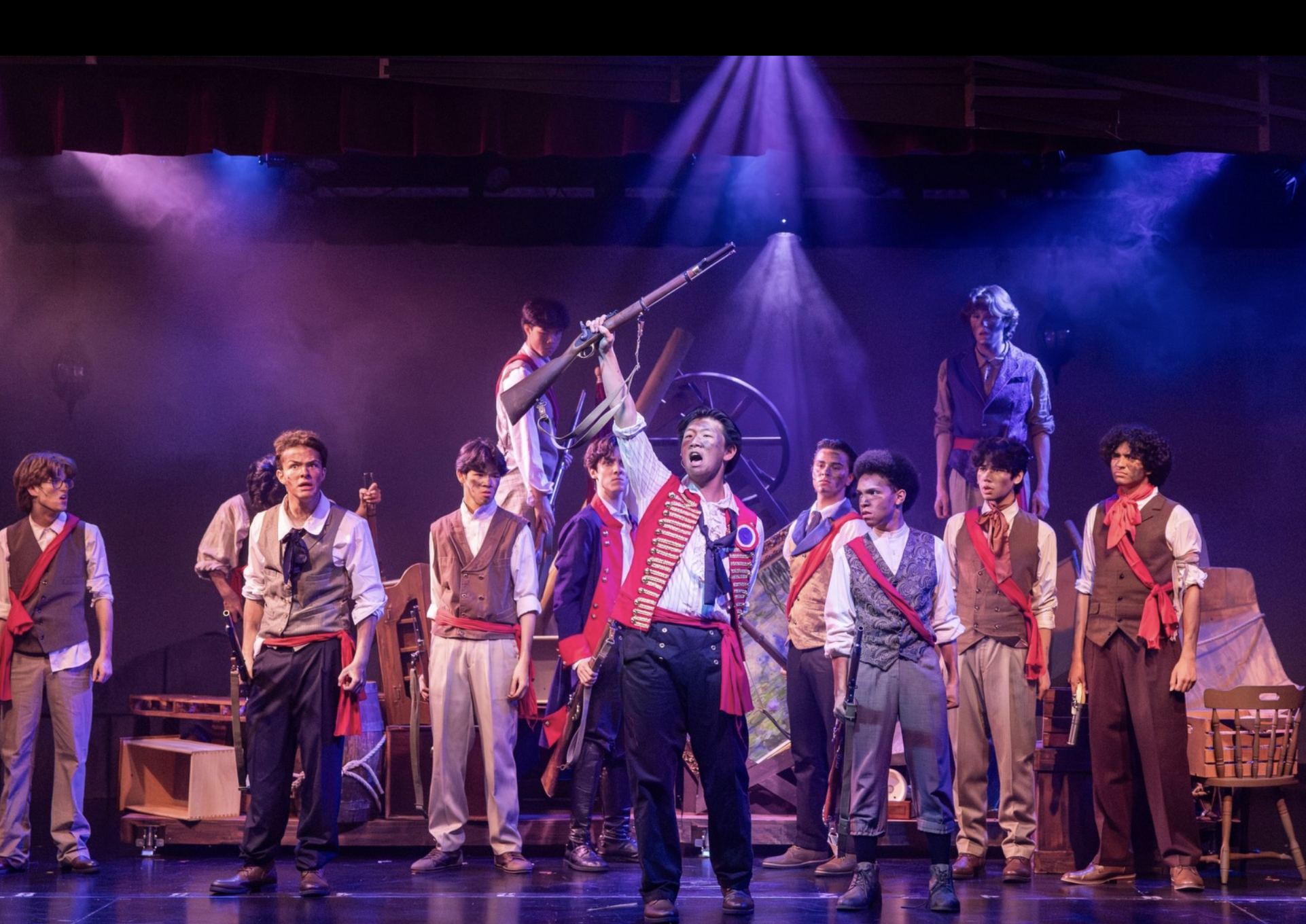
By the time the last song—an iconic anthem calling for a better tomorrow—concluded and the red curtains of the Kinkade Theater closed on Les Miserables, the audience had journeyed through visions of oppression, rebellion, and hope. While every show performed at Mitty requires the dedication of a dynamic and interworking cast, pit, and crew, Les Miserables ranked among the most involved. Known for its huge scale, emotional depth, and gripping storyline, this mainstage show notoriously sold out fast. Keeping up with its high demand is tasked to everyone involved, who worked through careful coordination over long hours.
While much of the action happened onstage, the pit orchestra supported from behind the scenes. Due to the scope of the show, the musicians were uniquely situated in the scene shop, behind the stage and actors. Without a direct view, the musicians relied on the conductor, who followed the performance through a small monitor to deliver real-time cues, requiring—quite literally—blind trust. Yet the orchestra had rehearsed this situation many times before: throughout tech week and during sitzprobe rehearsals, when the pit and cast came together after rehearsing separately, the orchestra learned to coordinate with the conductor’s cues and actively listen. On the day of the opening show, the orchestra and stage crew ensured that the music remained balanced and continuous, adjusting when challenges arose. Despite this technical challenge, the cooperation between everyone created beautiful harmony that echoed the theme of unity in the musical.
Every prop, light, or sound the audience experienced was prepared and practiced by the Build or Show Crew. Build Crew consists of anyone willing to lend a hand to help construct the backgrounds and props of every show, but members who show true commitment are chosen to be a part of Show Crew, which not only works with the physical aspects on the set, but is also entrusted with the lights, cues, and music. Their meetings and rehearsals often end toward midnight, reflecting their dedication to creating a superb show. Sophomore Holly Dang, a member of Crew, shared that she often “had to prepare for the much longer hours both mentally and physically since most of the rehearsals were on school nights.”
Because Crew members are present throughout every stage of creating the show, they often see moments that the audience does not. Holly also shared her experience of “noticing how the actors may panic if they miss a cue…but to the audience they may think that the actors are flawless.” Only seeing what is presented to them, the audience is unaware of every moment that happens just beyond their sight.
For Les Miserables, the orchestra musicians’ unique placement backstage allowed for similar glimpses of the activity backstage, with senior flautist Jamie Lee humorously recounting one of her favorite moments of the show: “after Gavroche’s dramatic death, I would see him walking backstage past the pit orchestra, completely unscathed.” Moments like these captured the fun and immense effort behind the scenes that brought the magic onstage.
As the performers bowed, the audience rose in applause, and the lights came back on, the story of Les Miserables was complete. Yet out of sight, crew members and pit musicians also celebrated a seamless performance built on communication, harmony, and grit. The dedication and coordination of performers, crew, and orchestra together made the show an unforgettable experience: Long after the curtain fell, the audience could still “hear the people sing.”