

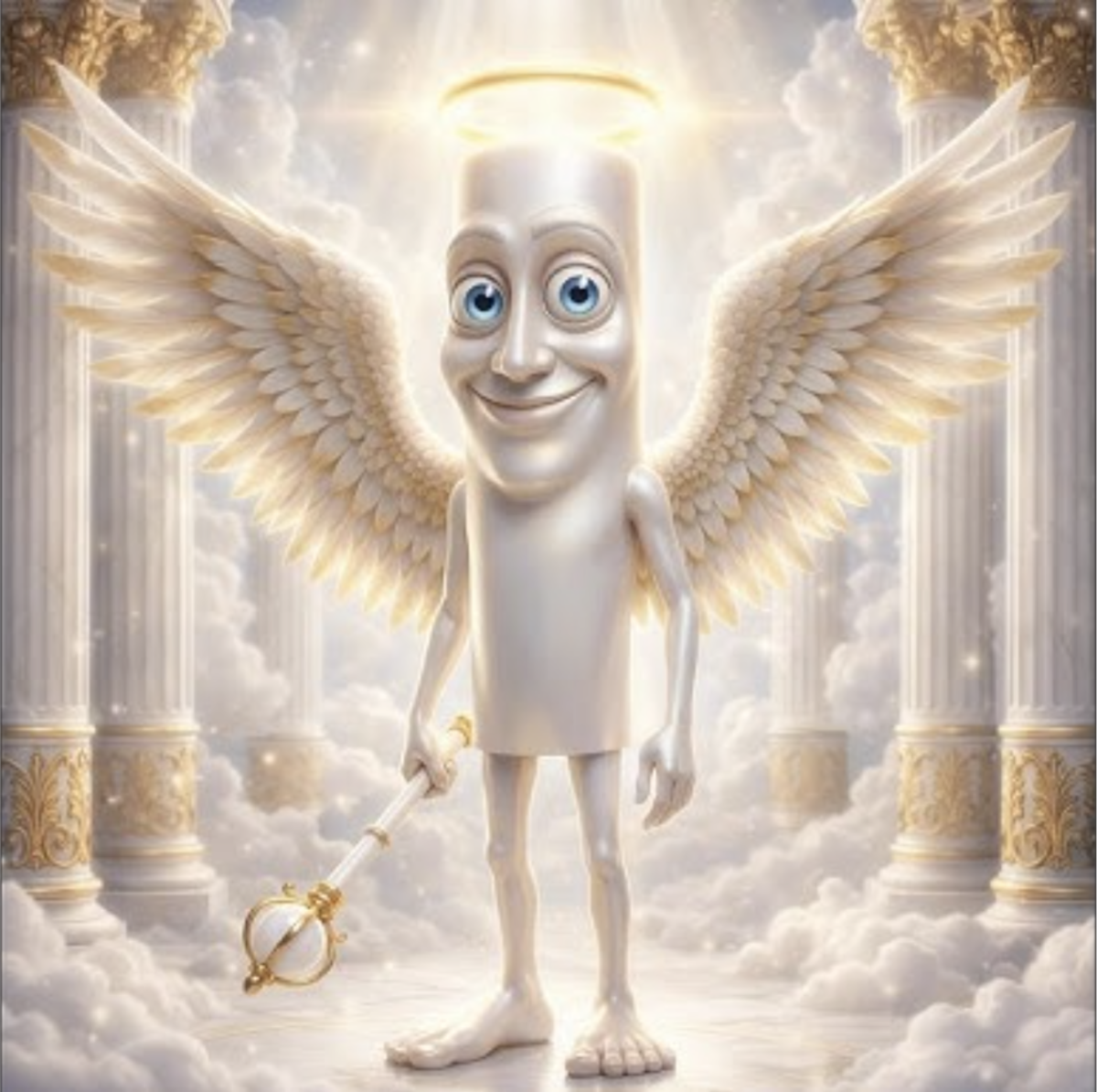
Tung God pictured above is an iteration of Triple-T Sahur. The Triple-T we see is an iteration of the Triple-T that existed before. And Triple-T himself is an amalgamation of photographs and words and other simulations of reality itself. Tung God is a simulacrum: he is a copy of something that doesn’t exist. As more and more of our reality—from memes to news to images to lifestyles—become representations of representations, we are placed at a societal crossroads. Parts of our interpreted reality will become derived from places that don’t exist, while reality itself is tucked behind the curtain such that nobody notices its disappearance. The question left for us now is what will we demand to remain grounded in reality. And I, for one, posit that we should ensure it is Tung God who will meet us at the Gates of Tung Heaven.
In order to achieve this, use our guide for embodying a simulated reality:
Live in the Given Explanations: Our daily routines are often simple. Wake up, immediately check our glowing rectangles, and allow them to tell us what the world is today. Integrated with the endless scroll, the modern stream of news takes the responsibility of making reality more urgent and dramatic (in between neatly placed ads). This urgency makes us feel like we are experiencing every terrible thing that has happened, slowly inheriting the burden of the Earth. We become numb to death, numb to extreme narratives, and numb to what the concept of reality truly is. And sometimes, whilst indulging in this cycle of life, we may question why that reality makes us so anxious. But as Bruce Lee once said, “don’t think, feel.” Oftentimes, when we are feeling disheartened or as though we are not enough, we need to remember that just as the source created this reality, it can take it away. Critically, we must open our hearts for reality to become as we need.
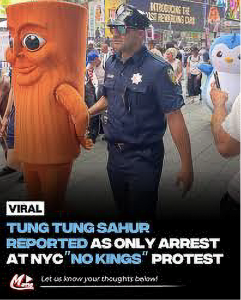
Anxiety cannot exist when reality is shaped by the scrolling comforts of the flesh. Whether the news seeks to scare us into engagement or shield us through distraction, both are equally hyperreal. And that is the pure brilliance of our current reality: it doesn’t need to exist to function. It only needs to circulate. Take Triple-T: he isn’t a person nor an idea—he is an accumulation of the beauty of this world. The more he is shared, the more real he becomes, despite having no origin.
Structure Your Identity in the Digital Wake of Another: If there’s one word that truly captures the essence of a LinkedIn profile or an Instagram account, it’s “authenticity.” Thanks to the evolving twenty-first century, we now have access to dynamic websites that can encapsulate our entire identity in just a few megabytes. In fact, these websites even graciously grant us new sources from which our identity can be derived. No object of human endeavour has truly been original, and it used to be that identity came from the people who surrounded us. Today, it’s all the same, but better: we can craft our own identities to become the people we wish we were, disregarding who we may be meant to be. By creating ourselves in the image of something that doesn’t actually exist, we can enter a new reality where we are whoever we want to be. We can become the high school student who founded multiple non-profits and did as much research as a PhD candidate, just as long as we write our descriptions well. We can become the person on Instagram whose travel adventures capture the essence of a free, natural life—just a fragment of #transcendentalism for a day. And we can become so much more than that. As Gandalf said, “All good stories deserve embellishment”—and so does every good person. Don’t worry if you haven’t quite fully transformed yet—it’s common to be somewhere in-between right now, just leaking a tad into our new hyperreality, with a slight exaggeration on LinkedIn or a selfie with a filter on Instagram.
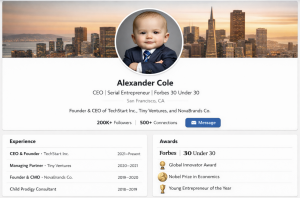
But I urgently implore you to consider molding your identity in the digital afterimage of someone you aspire to be. Your future self (at your future college) awaits this transformation.
Allow Your Media Stream to Simulate Your Personality: The Buddha once said: “What you think, you become. What you feel, you attract. What you imagine, you create.” And, as social creatures, it is our forms of education—the media, school, second-hand descriptions, etc.—that shape our understanding of thought and largely influence what we feel and imagine. And in this ever-more-simulated reality, it may no longer be us who holds agency over what we think, feel, and imagine. The algorithm which hand-crafts your page is systematically tracking your responses, and developing a digital and compressed version of your personality, which guides its selection of targeted content and advertisements. As this media reaches you, it will begin to influence you and your personality. And, over time, you slowly become a simulated reflection of your past self. But do not fret—this is a consummation devoutly to be wished. Similar to the earlier topics, this allows us to become something larger than ourselves—we can be connected as a larger humanity through bytes on a computer. Society finally compressed into a USB stick. We can exhibit our own hyperpersonality, a true exemplification of what we should’ve become before social media. So allow yourself to become fully immersed in it—do not look for truth.
Conclusion: For many, the Matrix is a more comforting reality than the one we understand ourselves to be in. Lucky for us, however, we don’t have to simulate the entire world in order to simulate ourselves. Technologically, we are approaching a Matrix-esque reality. Socially, we can already be there. So let’s go there.