

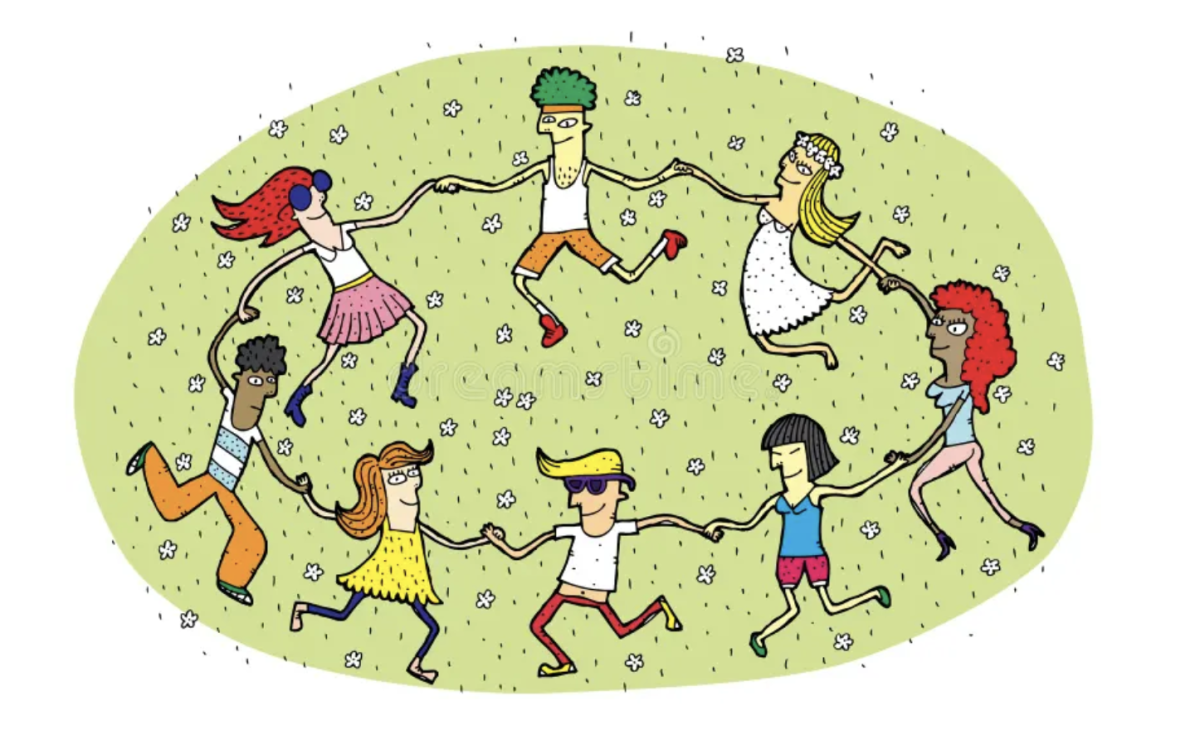
There is a pretty good chance that right now, you are staring at a rectangle. Your phone is a rectangle. Your iPad is a rectangle. Your desk is a rectangle. Your classroom is a rectangle. If you opened up Google Maps and zoomed out, all you would see is an enormous grid of… more rectangles. We have designed our planet using right angles and called it civilization, but it’s beginning to make us feel miserable.
But what if I had a solution to put us out of our misery? What if I told you that solution was to dance in counterclockwise circles?
I am well aware that this sounds unhinged. But I like to call it an “out-of-the-box” solution instead (no pun intended). Because we need an unhinged solution for our situation: we’ve forgotten how to properly function and interact with other people in the same room. We sit in rows in classrooms, doomscroll alone in the corners of our room, and then wonder why we feel so lonely. The rectangle did this to us. What we need now, is a circle. Not metaphorically—literally.
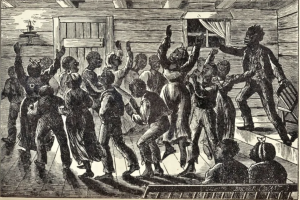
Circles have been single-handedly holding human civilization together for centuries. In African American traditions dating back to more than 300 years ago, enslaved people engaged in “the ring shout”: a counterclockwise shuffling, stomping, spiritual dance. The ring shout was one of the earliest and most powerful forms of collective worship and resistance in America.
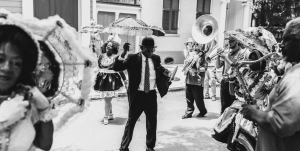
The Second Line Parades in New Orleans are vibrant, weekly neighborhood processions rooted in African American and Caribbean traditions, featuring brass bands, dancing, and celebratory umbrellas. But more importantly, these processions are purposely led in loose, joyful spirals through the streets.
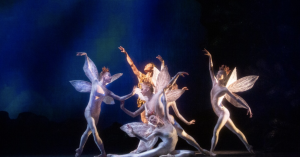
For centuries, when celebrating a wedding, a new year, or a harvest, humans have reached for the circle. There’s a reason why, in Renaissance paintings, Shakespearean plays, and impressionist art, figures which appear to be celebrating something important are always holding hands and dancing in a circle.
Evidently, the circle is not a new idea. Arguably, it is the idea. We just stopped using it when we started organizing our lives around screens.
What’s even more interesting about these dances is that they almost always move counterclockwise. In Greek folk dances, Celtic traditions, and African American ring shout, the groups participating move in a counterclockwise pattern, as their left foot pushes off the ground and their right foot sidesteps over. Researchers think that this pattern has to do with right-side dominance; most people lead with their right foot, and so naturally their body moves this way too. In other words, you were born for this.
But what, really, does the circle give us that a rectangle does not?
Faces.
When you sit in a classroom, you’re staring at the back of twenty other heads. But when you’re in a circle, you get to see everyone. There is nowhere to hide! Everyone is equal, everyone is seen, and everyone is included. There is no one who is “the head of the table”. There is no one hiding in the back row. There is no one craning their neck at a 90 degree angle because someone taller sat in front of them (a daily struggle for the author, who is 5’2″).
By contrast, rectangles imply hierarchy. They signify order, power, and separation. Take for example a formal dinner table—the kind you see in all those Disney movies where the villain sits at a table roughly the size of a football field and the candle is placed 42 ft away from them. That is a rectangle. That is also a host with no friends.
I am not saying that PE should turn into a mandatory drum beating circle. I am not saying that Jazz Band should crusade around the campus while spinning in spirals. One day, when the time comes—when you’re waiting outside for your ride, and you catch everyone else around you being a screenager—you have a very important choice to make. Either you further psychologically distance yourself from your friends and let them drown in their own misery, or you can grab someone’s hand, smile, and start moving counterclockwise. Their eyes will temporarily meet yours with confusion, but their feet will start moving automatically. It’s already built into their bodies. It’s a dance they’ve known since before they were even born. Soon, everyone else will join in, and you’ll realize you made the right choice. Your one decision—to stop scrolling and start spinning–will have turned a moment of disconnect and separation into a profound moment of community, connection, and friendship.
I am dead serious. Turn to the person sitting next to you. Smile. Grab their hands. And start spinning.