

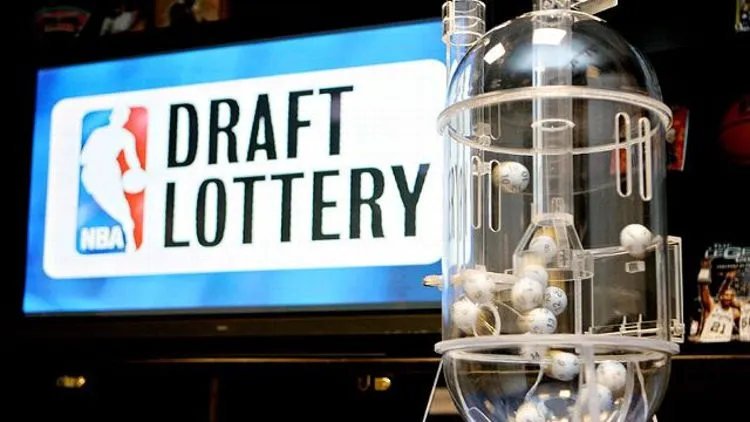
A new record was set in the NBA, and it’s not one to be excited about: an astounding five teams (Washington Wizards, Indiana Pacers, Brooklyn Nets, Sacramento Kings, Utah Jazz) finished the 2025-26 regular season with 60 losses or more. In a league where seasons are 82 games, this upwards trend of high loss totals is alarming for the competitiveness of the game. What’s worse is that teams aren’t losing by random chance. Rather, they’re playing the backwards game of “tanking” (intentionally losing games to obtain a lower seeding) for a higher draft pick.
Tanking is not a new problem for Adam Silver’s NBA. Just in 2019, the NBA Board of Governors flattened the lottery odds for the three worst teams to 14% for the number 1 pick, as opposed to 25% for the single worst team before. The lottery floor was also changed to only a top five pick, previously a top four pick.
However, since then, this trend of “bottoming out” in the standings has become more prominent than ever. And the rationale for team front offices is simple: if you’re not a championship contender (Oklahoma City Thunder) or an up-and-coming playoff team filled with young star talent (Charlotte Hornets), there is virtually no reason to be in the middle of the standings (Seeds 7-10). At this range, you’re both too bad to win a playoff series but too good to win a high draft pick that elevates your franchise to the next level of contention.
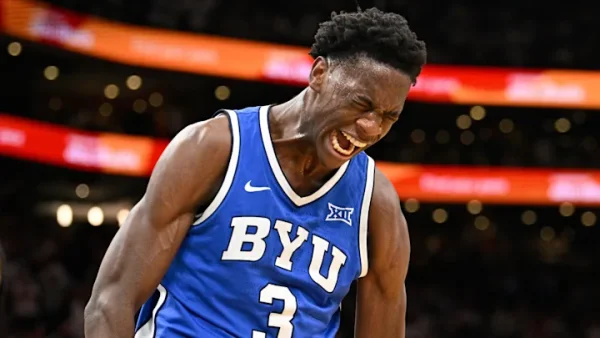
This year was especially brutal because of the amount of talent in the upcoming 2026 NBA Draft. AJ Dybantsa is a fluid 6’9 wing who just averaged 25.5 ppg (51% FG) as a freshman at BYU. Meanwhile, Darryn Peterson averaged 20.1 ppg in only 29.1 mpg and has been compared to the likes of Kobe Bryant, Anthony Edwards, and Ray Allen for his elite shot-making ability. Beyond these two, Cameron Boozer, Caleb Wilson, Darius Acuff Jr., and more all boast of superstar upside. With a class this stacked, it’s easy to see why teams want the best chance at attaining one of these prized prospects.
But while no one would deny the benefits of tanking, the real problem lies with the NBA ownership. When you watch a game on the NBA app or purchase tickets to see your favorite star in-person, no one wants to see a horse fight where one team is resting all their starters and clearly trying to lose. It simply isn’t enjoyable to watch and hurts the profitability of the association.
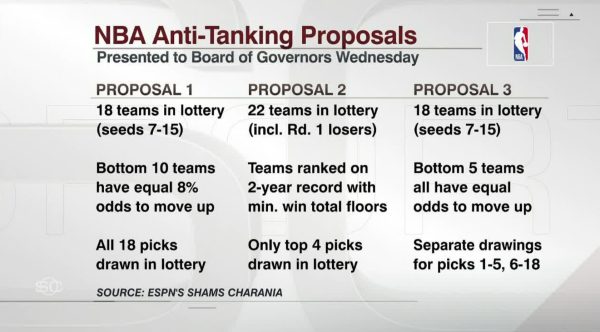
To address this ever-growing issue, Commissioner Adam Silver has presented three proposals that will be voted on by the NBA Board of Governors.
But even if the selected proposal works and tanking is no more in the NBA, the uncomfortable truth is that tanking is one of the only ways small-market teams can build a successful roster. Even the top two teams right now in Oklahoma and San Antonio attained franchise cornerstones (Chet Holmgren, Victor Wembanyama, Stephon Castle) by intentionally losing games.
In free agency, stars are far less inclined to sign with a team in Sacramento compared to one in Boston, assuming contract offerings are equal. This makes roster construction difficult for teams in less desirable cities. Tanking allows teams to attain a star through their own volition, and these proposals would make landing the top pick more of a lottery than it already is.
The reality is that both sides are right. Indeed, tanking promotes a bad product in the regular season, but it is still the most reliable way for teams to build championship contenders. That’s what makes this debate so fascinating, and only time will tell if the NBA makes the correct decision.