

This winter break, I visited Washington D.C., where I met a tall, orange man. He’s a widely recognized public figure, waving at everyone and demanding attention. Some people even say he’s full of air.
The inflatable Tube Man is genius advertising for a number of reasons. He’s bright and eye-catching… unlike my group’s project slides. He’s also somehow still standing… exactly like my group’s project slides even though we had zero coordination. Regardless, the Tube Man is just one of the many inflatables that’s catching our attention. Yes, inflatables might be full of air… but they’re also full of surprises. From the airbags in your car, to the life savers at your local pool, inflatables have shaped medicine, engineering, and emergency relief, in ways we can’t ignore.
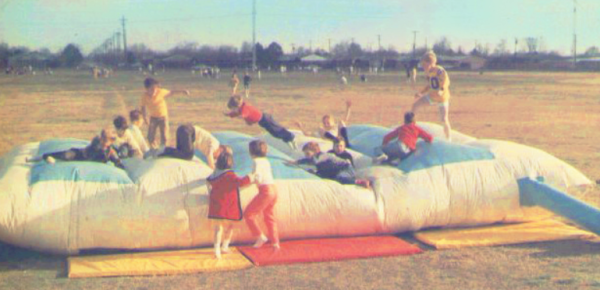
The first inflatable structure was designed in 1959 by engineering professor John Scurlock. He referred to this mind-boggling, eye-opening, and perspective-altering prehistoric bouncy house as a “Space Pillow”. His son stated, “We had [a Space Pillow] permanently in our backyard, and the whole neighborhood would come and jump on it.” At least, that’s the reputation they’ve earned, but they’re so much more than what the third graders at Pump It Up treat them to be.
So yeah, inflatables are loads of fun! The end.
Okay wait…Inflatables aren’t just fun and games, they’re also driving technological progress. What if I told you that the Space Pillow… is actually being used in space. Yes, space.
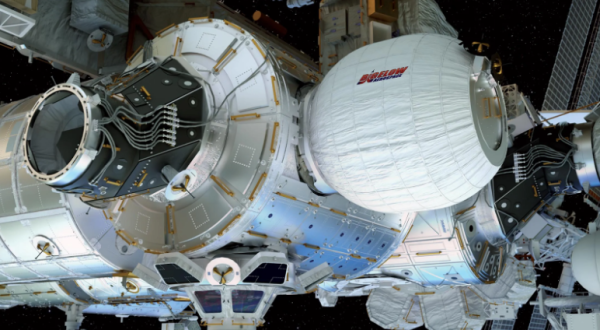
In 2016, the first inflatable space habitat was sent up to the International Space Station, where it inflates once it begins its orbit. I don’t know about you, but personally, I would not trust a bouncy house to keep me safe in space. But Mike Gold of Bigelow Aerospace notes, inflatable stations are “actually much safer when it comes to both radiation and physical debris because of its bulletproof weave.”
And it’s not just space stations. Inflatable igloos can withstand temperatures down to -67°F, and inflatable underwater habitats can travel nearly 670 feet deep. No joke.
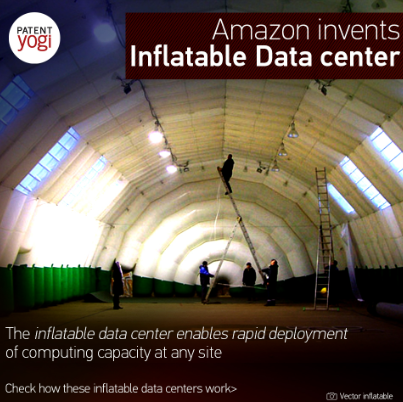
We even have inflatable data centers for my future career in data science! And inflatable homeless shelters, if that career doesn’t work out. But seriously, inflatable data centers have become one of the most important developments for deploying computing power. Without having to spend months designing and building a conventional facility for housing racks and servers, an inflatable closure can be established quickly and expanded on demand.
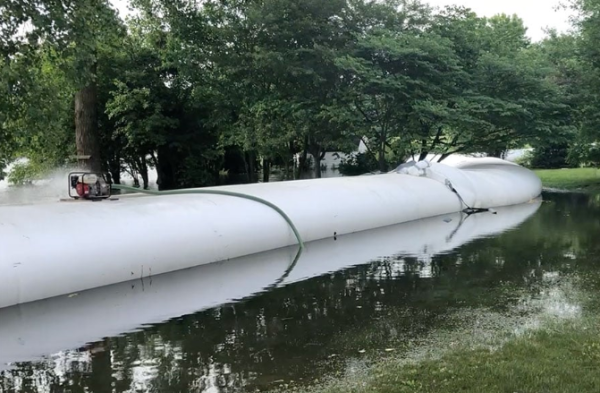
From space exploration to data centers, it’s important to be aware of how inflatables are pumping up the next generation of technology. But perhaps more important is inflatable infrastructure. Flood barriers, like the brand Dam-It Dams, provide a lightweight alternative to the traditional sandbags. These are capable of diverting water to create temporary dry areas for construction and repairs. The lightweight alternative Dam-it Dams offers a simple and cost-effective solution for infrastructure projects while minimizing environmental impact.
Moreover, inflatable bridges can be used after earthquakes, bridging the gap between those calling for help and those who answer. And during the Covid-19 pandemic, when patient beds were running thin, inflatable isolation wards, vaccination stations, and even entire inflatable hospitals popped up. One supplier, Losberger, saw a 50% increase in demand for their inflatable hospital tents.
Each tent accommodates up to 50 patients and is ready to use within minutes. Because they are inexpensive, portable, and easy to deploy, inflatables expand who receives aid—and who can provide aid.
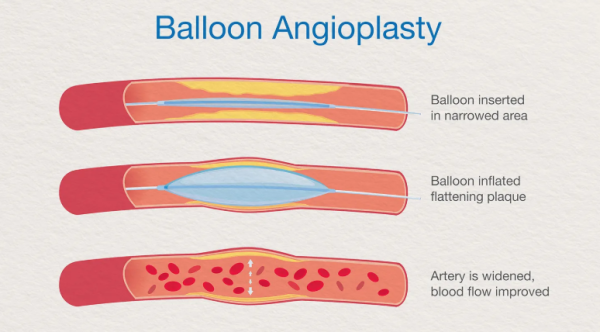
Aside from helium hospitals, inflatables have made countless contributions to medicine, saving lives like my grandpa’s. He had a blockage in his artery, cutting off nearly 80 percent of his blood supply, and he had to undergo a balloon angioplasty. The process involved moving a deflated balloon into a blocked blood vessel and slowly inflating the balloon until the passageway is clear, restoring the flow of blood. It succeeded! I bet you didn’t think that a birthday balloon could help you live to your next birthday.
But what if you break a bone? You’ve probably seen this boot before.
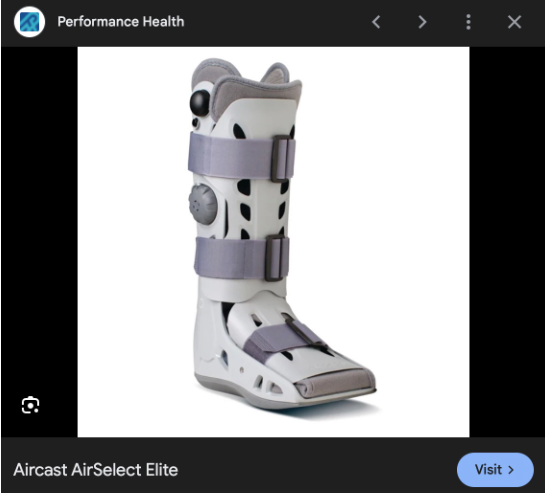
Surprise surprise, it’s inflatable! Hence its name, AirCast. Inflatable casts have air-filled bladders within the hard shell that provide customizable compression and support for healing injuries, offering a light waterproof alternative to traditional plaster casts. Where conventional devices fail, inflatables succeed because they adapt to each individual patient.
Whether it’s advancing technology or saving lives, inflatables remind us that innovation doesn’t need to look serious to be significant. The cure for heart attacks can start with a balloon, space exploration can start with bouncy houses, and genius advertising can start with an orange, air-headed man.
At the end of the day, inflatables might be full of air, but they certainly aren’t empty of impact.