
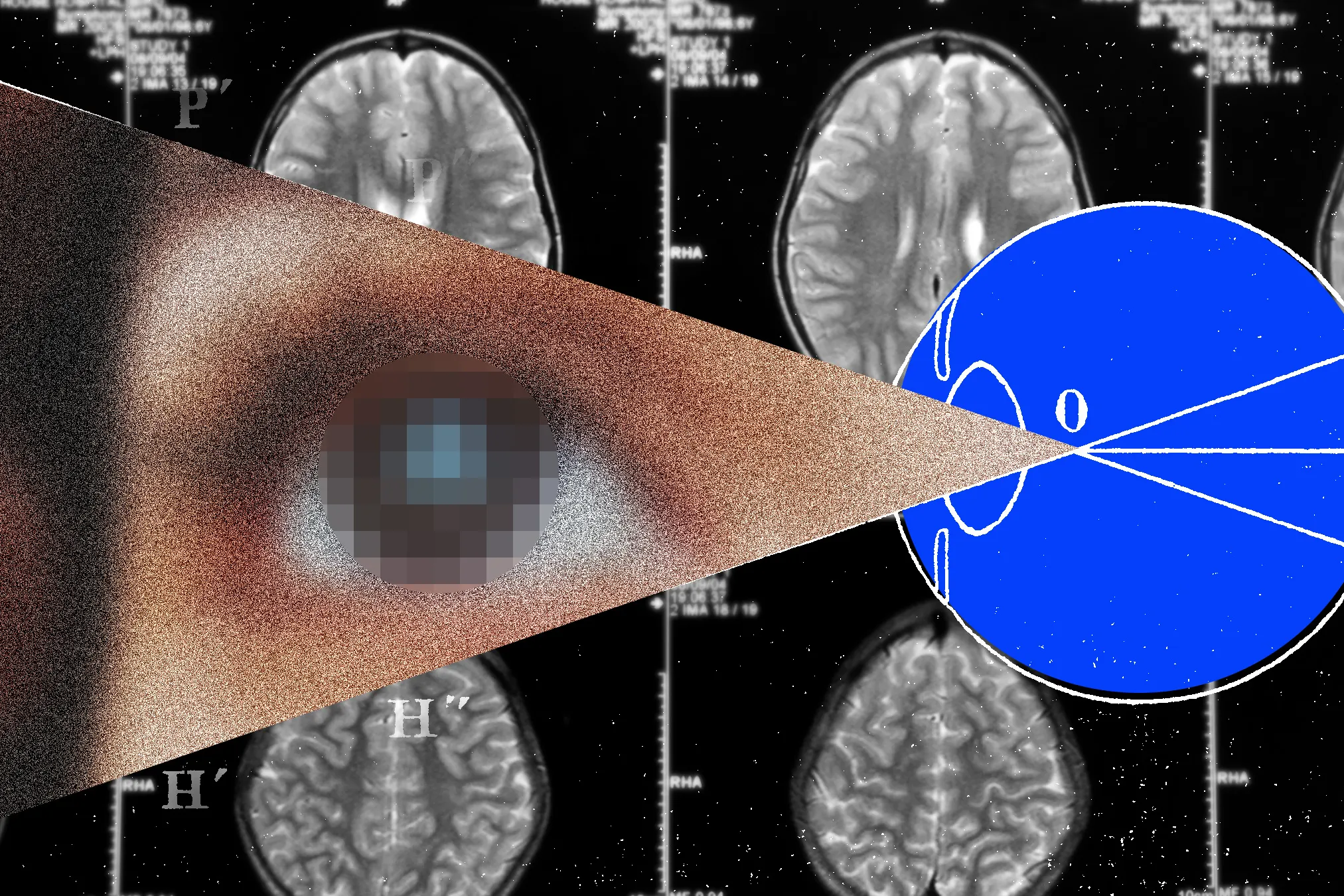
Visual impairments are considered to be one of the most feared disabilities worldwide. For over 5 million people with vision damage, however, a team of Stanford researchers may have found the cure.
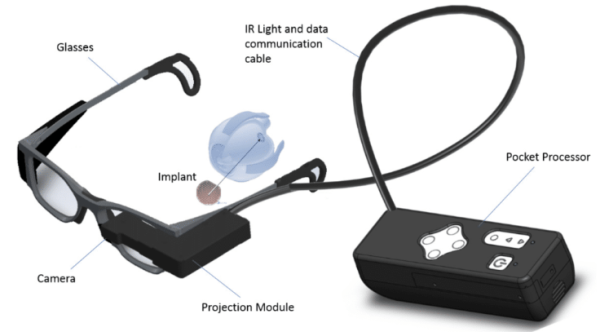
Last year, a device called PRIMA, consisting of a small camera mounted on a pair of glasses and a wireless chip, was developed by Stanford researchers, as well as collaborators from across the globe. PRIMA projects images, which are captured by the small camera, to the wireless chip, which is implanted in the eye. The chip converts these images into electrical stimulation, largely replacing the role of photoreceptors: neurons in the eye that convert light into electrical signals for the brain.
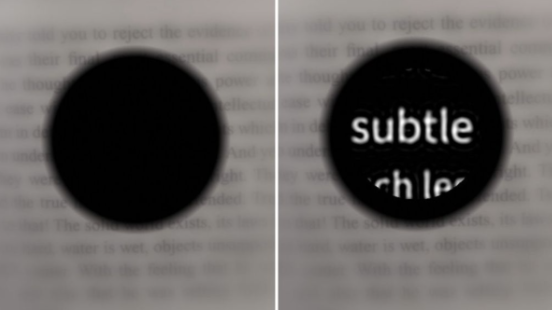
For people with age-related macular degeneration(AMD), an eye disease that damages photoreceptors in the center of the retina and causes a loss in vision, PRIMA could take the place of those damaged photoreceptors and thus restore vision.
What makes it different from other technology?
In the words of Daniel Palanker, PhD, a professor of ophthalmology: “All previous attempts to provide vision with prosthetic devices resulted in basically light sensitivity, not really form vision. We are the first to provide form vision.”
PRIMA uniquely restores form vision, which is the ability to perceive and distinguish shapes and patterns in the environment by organizing retinal images into meaningful structures. People with vision loss often lose this ability, and consequently can sense light but not identify shapes or objects.
Immediately after implanting the wireless chip, some patients could distinguish patterns, while all patients saw improvements in visual acuity (the eye’s ability to distinguish fine details) after months. In a trial study of the effects of PRIMA, 27 out of 32 patients were able to read after a one-year trial. Additionally, patients were able to read an average of 5 more lines on a standard eye chart.
What are the limits of PRIMA?
However, despite its promising results from studies, PRIMA faces important limitations: in fact, it still has a long way to go to be called a panacea for blindness. The device has been tested primarily in patients with age-related macular degeneration, a condition in which central photoreceptors are lost but much of the inner retinal structure remains intact, resulting in patients to have some peripheral vision.
Since PRIMA relies on these preserved retinal neurons to transmit electrical signals to the brain, the device proves to be ineffective for patients whose eyes are damaged beyond the photoreceptors. Age-related macular degeneration is one of the leading causes of vision loss in adults over 50; however, other forms of visual impairment including glaucoma involve severe retinal or optic nerve damages that PRIMA cannot yet address.
Moreover, PRIMA remains far from restoring normal sight. The device currently provides only black-and-white vision, without intermediate shades of gray. While this limited visual quality is sufficient for reading large text or identifying objects, it may be inadequate for complex tasks including facial recognition and reading at a normal pace. Therefore, most patients require months of training to adapt to the technology and effectively utilize it.
Retinal implant also has surgical and medical risks. In the clinical trial, 19 out of 32 participants experienced side effects including high eye pressure, retinal tears, or bleeding beneath the retina. Although nearly all of these complications were resolved within two months, the high percentage of those who’ve experienced side-effects highlight the underlying safety risks for the implantation.
Additionally, further studies of retinal implants suggest that long-term efficacy of PRIMA remains uncertain, as most patients continue to meet the clinical definition of legal blindness with no significant visual acuity enhancements if not using zooming or brightness adjustments.
What does PRIMA mean for the future of artificial vision?
While challenges remain, PRIMA offers a new possibility for millions of people living with vision loss. With its ability to restore form vision while preserving natural peripheral vision, PRIMA marks a revolutionary beginning for a new generation of electronic retinal implants. Researchers are already working on next-generation models of PRIMA aimed at improving visual resolution and overall quality of life for patients. Planned advancements include smaller pixels that could significantly increase resolution, as well as software capable of producing grayscale vision. In the future, modified versions of PRIMA may be adapted to treat other forms of blindness beyond macular degeneration.
PRIMA stands as powerful proof that even the once-irreversible boundary between blindness and sight can be transcended.