

Ethics. Culture. Justice.
When students consider ECJ immersion trips, they often look at trips beyond the United States internationally, expecting the most meaningful experience of an immersion trip as one 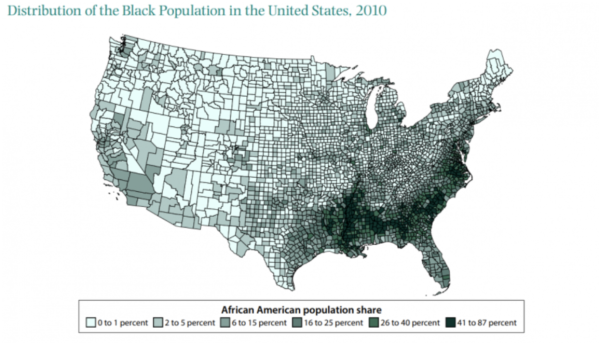 far, far from home. Starting with next year’s 2026-2027 school year, a new ECJ is being introduced that, like other domestic trips, challenges that assumption: The American South. This new ECJ invites students to engage deeply within a region whose history offers valuable and indelible lessons in racial and social justice.
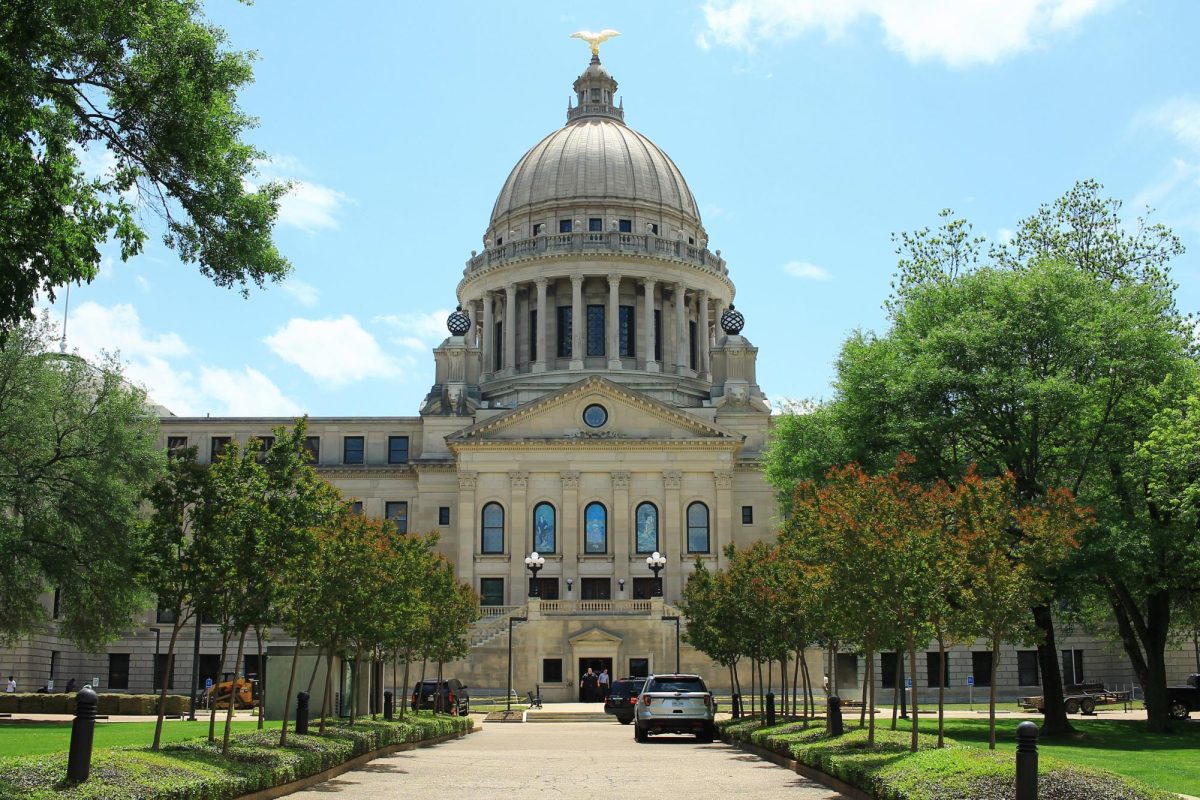
Students on this new ECJ will visit cities and states such as New Orleans, Louisiana; Jackson, Mississippi; Montgomery, Birmingham, and Selma, Alabama; and Atlanta, Georgia. Each day balances direct service in under-resourced neighborhoods, while also allowing students to meet local leaders, visit iconic civil rights landmarks and attain a deeper understanding of political and social movements that continue to shape our nation.
Because of the region’s closer proximity to us, the program also creates greater opportunities for advocacy and realistic action, allowing students to face issues that are more timely and relevant to our communities than we may realize. ECJ courses serve as gateways for students to fully immerse themselves in the lives of others. While social justice issues can be taught through reading, lectures and discussions within classroom walls, immersion programs like this new American South trip break through these limitations and unlock limitless “lived” experiences and possibilities by allowing students to serve communities, witnessing first-hand the lasting impacts of racial segregation in modern day.
The American South has fostered many pivotal moments of Civil Rights movements, including the Montgomery Bus Boycott, the Birmingham Campaign, and the Selma Voting Rights marches. The events led directly to landmark laws like the Civil Rights Act, making the American South the nexus of activism, legislation, and change. In the map shown above, the racial makeup of the country candidly shows how the South historically has had the greatest proportion of Black citizens; and given that reality, these are the states where the scars of Jim Crow laws, school segregation and voter suppression have been the most damaging.
Misconceptions about the U.S South continue to persist. Some presume that socio-economic equality, equal opportunity, and meritocracy for all, heedless of race, are realities following the Civil Rights Movement of the 1960s. However, according to the National Community Reinvestment Coalition, “In 2022, the median White household held $284,310, in wealth, more than six times that of the median Black household at $44,100.” Many fail to understand that racial inequities like these are still heavily prevalent within the United States. Drawing on his experiences growing up in Atlanta, Georgia, Religious Studies and Social Studies teacher Tim Wesmiller has sought to confront assumptions like these by offering an ECJ to illuminate their understanding of these issues.

As Mr. Wesmiller asserts, “American South offers essential context for understanding how justice operates in the United States today. While concepts like fairness, accountability, and equality are often discussed in classrooms as ideals, their outcomes are clearly visible in the landscape itself. Laws passed decades ago still shape who has access to opportunity, protection, and power.”
For instance, Southern states continue to have some of the highest incarceration rates in the country, which is a reality that many scholars trace back to post-Reconstruction policies and the criminalization of Black communities. By studying justice in a region where its history of successes and failures are impossible to ignore, students confront how justice operates beyond definitions and intentions.
As Mr. Wesmiller puts it, “We cannot move forward as people until we’ve acknowledged the past.” The South is not just a setting, but raw evidence of this struggle. For example, even after Brown v. Board declared segregation unconstitutional in 1954, Southern resistance required federal troops to enforce integration in Little Rock, revealing how justice can be promised in law yet resisted in reality if minds and hearts aren’t changed.
For many students, the American South exists first as an idea rather than an actual place. Those ideas are often shaped by distance, textbooks, and media portrayals rather than lived experience, especially for students growing up in California. For example, textbooks may focus on the Civil Rights Movement but gloss over racial and economic inequalities that persist today. Students may assume that the region is defined solely by rigid racial divisions or that a domestic ECJ will be less transformative than one abroad.
While these expectations are common, they oversimplify a far more complex reality. ECJ American South directly challenges these assumptions by showing that transformative learning is not determined by distance. Students will engage with local communities, experience how history continues to shape lives, and face ongoing racial inequalities, showing that meaningful immersion can occur close to home.
By attending ECJ American South, students are offered a guide to connect the dots from beginning to end. Through the year-long course, students examine how racism continues to shape modern day society, gaining a clearer understanding of how past divisions have influenced the realities communities face today. They explore issues such as racial profiling within the criminal justice system, disparities in hiring and housing opportunities, and modern debates surrounding voter ID laws that disproportionately affect marginalized communities.
An informed perspective is deepened for students on this new ECJ, where students make visits to some of the most important states charting these issues: Louisiana, Mississippi, Alabama, and Georgia. Standing inside Martin Luther King Jr.’s home in Montgomery, Alabama, for instance, and hearing stories from individuals who lived through the Civil Rights Movement, students confront the reality that the fight for justice did not end in the 1960s, but continues in new forms today.
A key goal of the ECJ American South is to reshape the way students reflect on justice and to put their faith into action. More than an historical study, the program emphasizes human connection, encouraging students to form relationships that deepen their understanding of justice behind theory. As students confront the realities of inequality and systemic injustice, they are pushed to move beyond a surface level understanding and consider what responsibility looks like in their own lives.
Reflection also becomes an essential part of the learning process, not as an academic exercise, but as a response to what students witness and come to understand. The course encourages students to confront uncomfortable realities, question long held assumptions, and recognize that tangible change demands awareness, accountability, and thoughtful engagement.
“If you’re willing to sit in discomfort and have a reckoning with your own assumptions, I think the other side is amazing,” Mr. Wesmiller aptly points out.
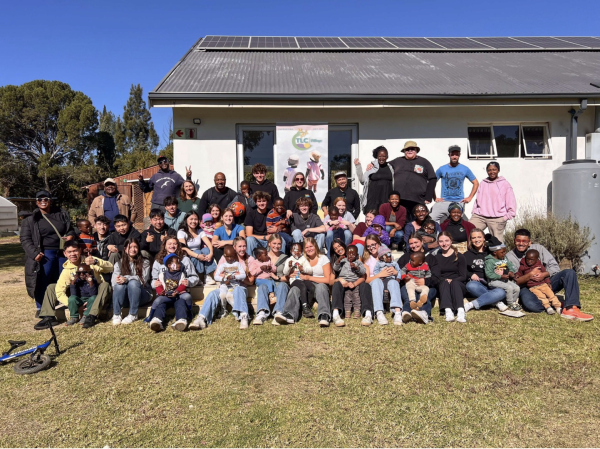
Ultimately, this new ECJ American South gives students the chance to move beyond the classroom and directly engage with the South’s history bumped up alongside modern realities. Through reflection and community interaction, students see the South for what it truly is beyond the stereotypes and, therefore, are empowered to connect past injustices like slavery and Jim Crow Laws to today’s justice issues.
By confronting difficult truths and observing how communities have historically fought for change, and by engaging and celebrating the vibrant music, food, and culture of marginalized communities, solidarity with the larger fabric of our American community can help bend the arc of the universe towards racial justice.