
After a bad day, it’s not your homework that’s waiting for you; it’s food. Food doesn’t ask questions, assign deadlines, or judge you for going back for seconds. Yet food is far more than comfort— it’s culture, it’s memory, and it’s identity. At Mitty, there’s a year-long course offered to juniors designed to teach students about this connection.
In Written Composition/A Moveable Feast, students are able to experience a class that not only challenges them with college-level composition but also explores the intersection of food and culture. By studying acclaimed chefs, novels, and fictional works centered around food, students practice and learn different types of writing, ranging from compare and contrast evaluations to persuasive pieces.
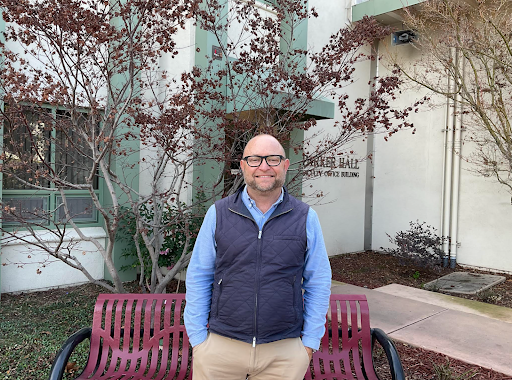
This class is taught by Mr. Craig Whitt, a Mitty teacher for 25 years. Mr. Whitt’s passion is clear: He collects cookbooks, travels the world searching for local hidden restaurants, and even hosts wine dinners for the school. His love of food was what ultimately drove him to introduce and begin teaching this delectable class. While earning his master’s degree at Cal Poly San Luis Obispo, he was required to teach a freshman English composition course, and when he came to Archbishop Mitty, he wanted to teach a similar college-level writing class. Former students have often recounted that their college writing prompts were nearly identical to what Mr. Whitt had them practice—with some even reusing his essays and earning higher grades in college—proving the class indeed gives students a head start.
And this class has a fun spin to it: For one assignment, it requires students to take a class field trip to a restaurant. That’s right—eating food is quite literally a requirement, and students must evaluate the restaurant’s food quality, presentation, environment, ambiance, and service in a written composition. According to Mr. Whitt, this assignment is often described as the students’ most memorable writing assignment, with Azuma Japanese Cuisine and Gochi Fusion Tapas being notable spots.
In fact, some alumni recall it as the first essay they truly felt proud of. This focus on hands-on experiences naturally extends into reading assignments that leave a lasting impression. For example, Jim Gaffigan’s New York Times bestselling novel Food: A Love Story is a comedic memoir about food that inspires students to write their own vignettes.
Students also describe the class as both engaging and supportive through promoting peer-to-peer interactions and providing plenty of in-class writing support. According to junior Enna Young, Mr. Whitt is always available for questions, and she feels she has become more fluent and expressive in her writing this past semester. Junior Timmy Calamba similarly describes Mr. Whitt as passionate, noting his emphasis on focused work in class while still having fun doing it.
Overall, this class blends real-world experiences with academic writing, giving students the opportunity to participate in a class with a unique twist. Written Composition/A Moveable Feast opens the door of food and its intersection with culture for all students. But the chance to learn about food isn’t limited to this class; anyone can do it anywhere. So go out, explore different restaurants, and discover how food connects to culture, just like students do in Mr. Whitt’s class.