
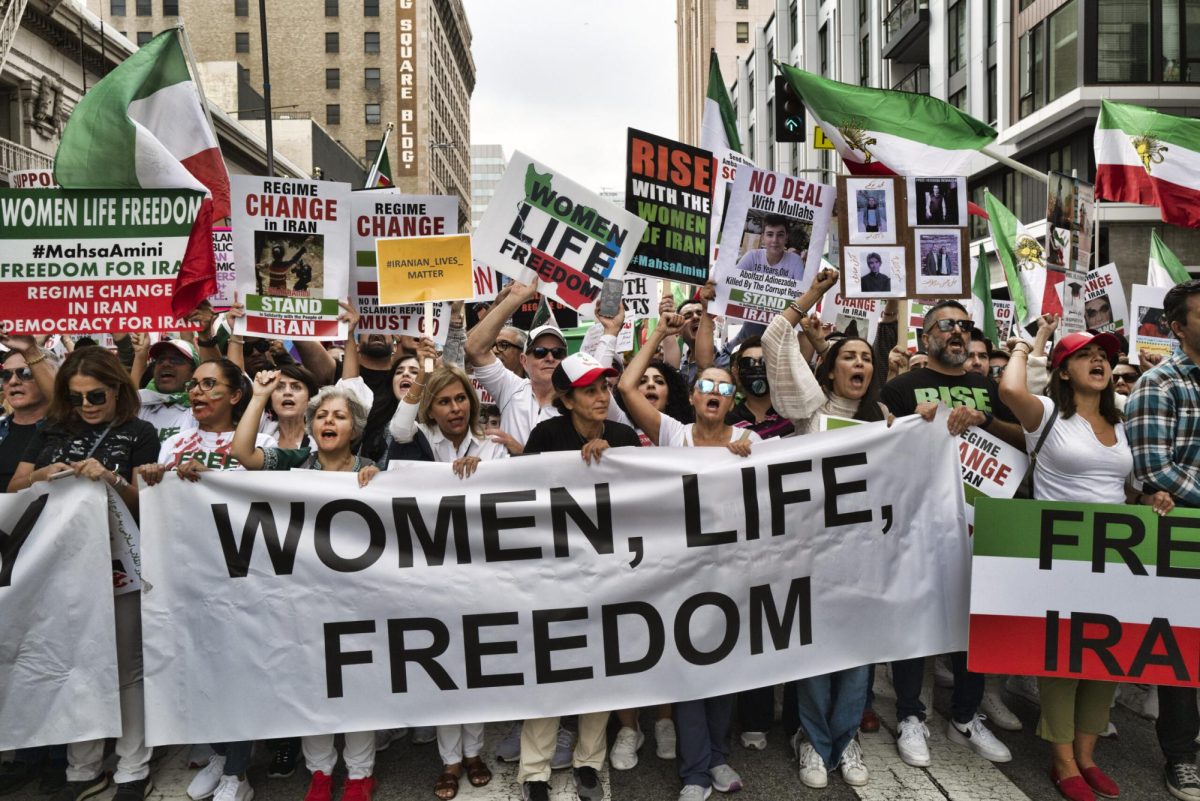
Protests in Iran broke out in late December of 2025, sparked by the astronomically high prices following the Iranian economic crisis and the plummeting of the Iranian Rial. The crisis caused by re-imposed sanctions, a twelve-day war, and governmental mismanagement has ended up spurring into a broader issue, with the public challenging the government for increased freedom of speech and expanded women’s rights.
The Iranian rial is currently at an all-time low, with ten million rial being equivalent to less than eight U.S. dollars. Consequently, internal and external sanctions have caused shopkeepers to pay much more for goods and, in turn, price them at extremely high rates. Additionally, chronic corruption in the government and severe economic negligence/incompetence have fueled the crisis, leaving the Iranian people flailing.
Through these protests, the Iranian people are asking for economic relief through the crisis they are experiencing, an abolishment of the authoritarian regime, freedom of speech, as well as a real democracy in place of a theocracy.
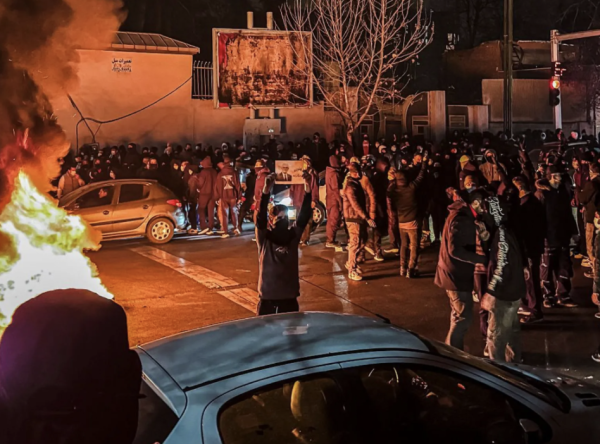
Shopkeepers in Tehran began closing their doors in late January of last year, and from that point onward, demonstrations have expanded on a larger and larger scale, ranging from sit-ins, marches, and other forms of defiance. These protests have been met with severe, violent backlash from the Iranian government. Over the last year that these protests have been occurring, there have been around 36,000 civilian deaths according to Iranian medics, morgues, and graveyard workers, with only 3,000 deaths being claimed by the Iranian government.
They have cut off all internet in hopes of limiting the flow of information to the outside world and controlling the narrative. Additionally, the government has been reporting skewed numbers of deaths resulting from the protests. The Islamic Republic of Iran, the current ruling theocracy, has been massacring protesters with tear gas, crowd-control weapons, and live ammunition; these actions directly violate the 1979 constitution which outlines rights for public protests to occur “peacefully.”
The issue that the Iranian people wish to address with these protests stems from a much larger upheaval in 1979. For around a decade prior, relations with the former ruler of Iran, Shah Mohammad Reza Pahlavi, and the Iranian people were worsening. Discontent grew among the Iranians over the increasingly authoritarian style of government and perceptions of Western influence on the Shah. Between January and April of 1979, the Islamic Republic of Iran overthrew the Pahlavi monarchy and established its rule. The Iranian people have not fared well under this government either, as the government eventually revealed itself to be restrictive and Islamic extremists, imposing a “guidance patrol” or morality police to persecute women who do not wear a hijab and modest attire. Since that point on, Iran has been in a constant state of turmoil, reeling from the massive power shift, economic ruin, two limiting and unjust rulers, and a rocky and volatile relationship with the U.S.
The United States’ embargoes and various trade restrictions on Iran are intended to pressure the current regime to change its behavior, ultimately hoping for an internal revolution and for power to change hands. Other than being a key factor in its initiation, the U.S. has been trying to stay out of the revolution and leave it to the Iranian people to take the lead, as prior interventions have caused a plethora of issues.
In 1953, for example, the U.S. government overthrew Iran’s democratically-elected representative and put in the Shah Pahlavi, who was more receptive to United States’ interests. The U.S. has since apologized for this action, admitting it was undemocratic. Although the Trump administration has stated several times that it will intervene if more unjust killings of peaceful protesters occur, it has chosen, so far, not to directly involve the U.S. military in the revolution.
However, the U.S. has spoken out against certain actions, such as urging Iran not to execute nineteen-year-old wrestler Saleh Mohamadi for taking part in a protest. Additionally, there have been several protests worldwide condemning the Iranian government’s treatment of their people on the day to day, along with their violent reaction to the protests. In LA, there was a large demonstration held in support of the Iranian fight for democracy, along with a march of 25,000 in Munich, Germany.
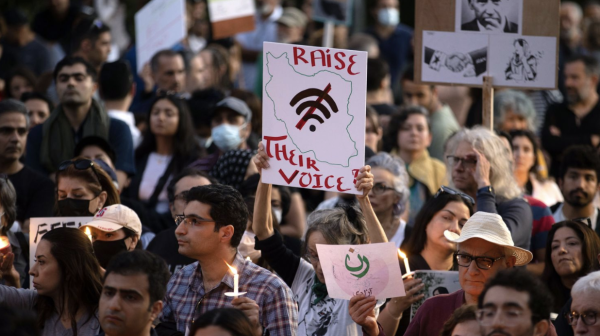
Currently, this is being viewed as one of the deadliest periods of repression in Iran’s history, resulting in thousands of deaths and tens of thousands of arrests. The Iranian government has kept the intricacies of the situation mostly quiet. Still, it seems the majority of the protests have been quelled, with the movement slowing down and protests reducing in number throughout the month, through harsh conditions, such as extreme violence towards protesters, the internet blackout, extreme prices, and curfews.
The Islamic Republic is still in power, but its authority is considered shaky and fractured at best. The Iranian people are still ready to fight for their rights and to continue the fight to the end, even though this struggle has become increasingly difficult each day it carries on.