

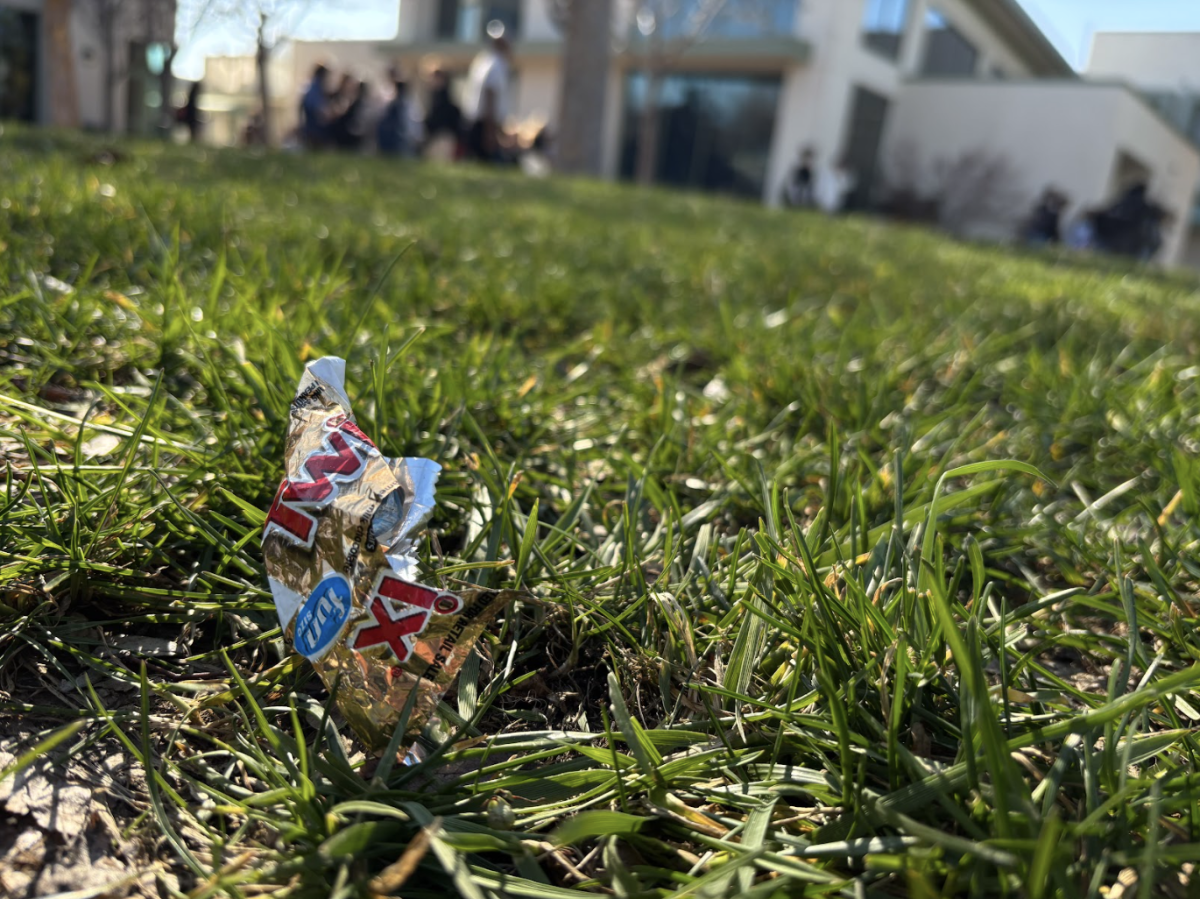
Imagine this familiar scene: It’s the passing period after lunch, and students around you are standing up and scattering off to class. Everybody is busy—too busy. There’s certainly no time to look back at the lunch spots you just left—and the things you left behind. It’s under the benches, on the tables, and even in the amphitheater: trash.
Trash is easy to dismiss because it seems so small. But it’s wrong to call it unimportant. Picking up stray pieces of it might not feel very useful, important, or urgent compared to everything else occupying our attention, yet that choice—whether to take responsibility or ignore it—reflects more on ourselves than we think.
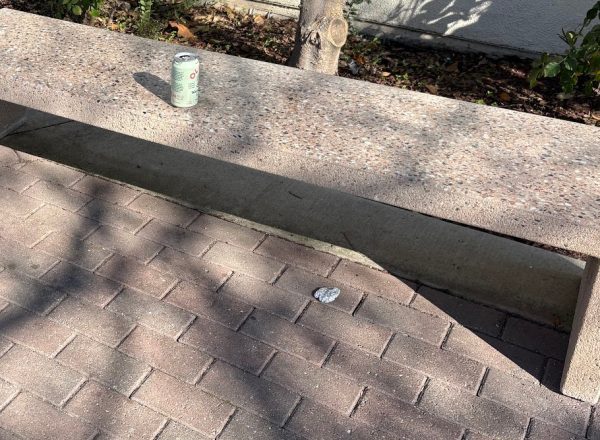
Picking up an abandoned plastic cup of matcha and throwing it in the trash won’t save the world. It won’t even reverse climate change or environmental pollution. However, it does have an effect—and an arguably more important one: It shows care. Whether it’s your own or someone else’s, it’s everyone’s responsibility to take care of our environment.
Plus, it helps out the custodians who already do a tremendous amount of work for our campus. Because it’s their job to help keep our campus clean, they’re the ones who have to deal with the mess we leave behind, and it’s inconsiderate to ignore trash because you expect somebody else to clean it up for you.
Most of the trash we photographed was in popular lunch spots. Of course, it’s not that students don’t know better; they’re busy people with places to be and more important things to take care of, and trash is low on their list of priorities when going to class.
Of course, not everyone can be completely mindful all the time, so picking up after other people is just as important as picking up after yourself. It is, after all, an essential part of a community to be willing to help other people in their shortcomings. If you see trash on campus and you have even a moment to spare, we encourage you to throw it away in the nearest garbage can. 
Sometimes, though, it can feel awkward to pick up trash that isn’t yours, especially in public. Why go out of your way to clean up somebody else’s problem? This is a classic example of the bystander effect: The more people who ignore a problem, the more tolerable and acceptable it becomes. This creates a cycle where students don’t throw away their trash around campus, leading trash to become more common, and eventually, seeing trash everywhere no longer seems unusual or worth noticing.
The bystander effect can be quite difficult to break: even while actively taking photos of trash for this article, one of our contributors (Vivienne Lee ‘27) realized afterward she was just leaving them behind herself.
The impulse to say “it’s not my problem because it’s not my fault” runs deep: I thought that because I had never littered, it wasn’t my responsibility to pick up after people who did. But I realize now that while the person who left that empty lunch carton behind won’t know or thank you if you clean up after them, the value of the conscious choice to take care of the campus and, by extension, the people in it, cannot be underestimated.
Leaving trash behind builds a habit of apathy in each of us; it builds a passive mentality that lets problems build up until they have real consequences. Picking up after ourselves is an exercise in overcoming that bad habit: we can teach ourselves to care again and to improve ourselves every time we make that conscious decision.