

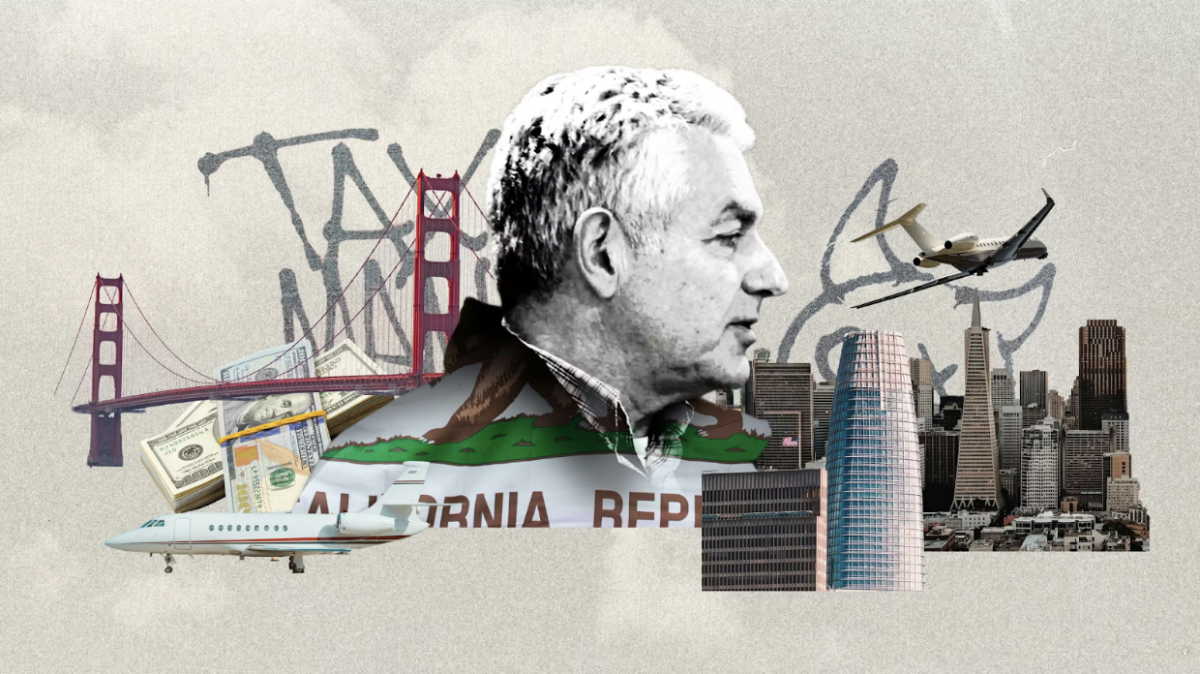
California has long since been a pioneer of the American Dream, producing unprecedented fortunes that place the state as the fourth largest economic powerhouse in the world, with a GDP of $4.1 trillion. Extreme wealth is no longer an abstract concept, but a mindset controlled by a small group of individuals with a concentration of wealth surpassing entire nations.
In fact, California is home to more billionaires than any other state with around 200 billionaires residing in the state currently, who collectively amass about $2 trillion in net assets along with a growing annual income of 7%. These billionaires tend to spend their vast wealth on luxury goods and expensive assets—all while California’s poverty rate, a staggering 17.7%, remains among the highest in the nation.
And because of this burgeoning wealth disparity, the Service Employees International Union-United Healthcare Workers West and Professors David Gamage and Darien Shankar of the UC Davis School of Law have collaborated to draft the Billionaire Tax Act, directed towards taxing billionaires with extreme wealth.
The roughly 200 wealthiest taxpayers in California would be required to either pay a one-time 5% excise tax or pay in 1% annual installments, generating close to $20 billion annually, and over the span of the five-year plan, raise around $100 billion. This dual system could address short-term needs while maintaining a source of income over the next few fiscal years. Despite California’s robust economy, the state has also had devastating losses to the marginalized, including the fact that more than a million Californians in the labor force are jobless. Such a sum of money could fund necessary sectors and reduce wealth inequality significantly, such as in the job sector where funds of $1.6 billion could help create more than 61,000 jobs.
Given that the healthcare industry was the driving factor for the billionaire tax, plans for the raised funds already dictate that 90% of the revenue will go to healthcare: specifically, the revenue would fund essential programs like Medi-Cal or nursing homes and clinics to balance potential federal cuts. These programs span over a variety of services, from preventative care and long-term facilities to rural community clinics.
In addition, the other 10% will be directed towards supporting staffing and districts in public K-14 education as well as improving school nutrition programs, leading to higher attendance rates and academic progress. Newly raised funds distributed annually would promote state agencies and curb declining subsidies, regardless of federal budget limitations. Thankfully, the program is also earmarked by the Franchise Tax Board, which means that the revenue is legally designated for the aforementioned areas, preventing tax revenue from being used for unnecessary or malfeasance purposes.

The implementation of the billionaire tax, however, poses its own risks. In California, the top 1% of wealth holders already pay around 40% of the state’s income taxes; therefore, an additional tax that drives a billionaire exodus from the state will jeopardize the state’s economy and generate a structural budgetary shortage.
Billionaires and Google founders Larry Page and Sergei Brin have already moved out of California and further departures will not only incur a substantial loss in the state’s revenue but also render the act useless, failing to provide any benefit. California’s governor Gavin Newsom has also echoed this sentiment, adding that such policies only put California at a competitive disadvantage against other states.
In addition, this tax is conceptually a wealth tax, which differs from a standard income tax. While income taxes function by taxing what is earned, wealth taxes collect money from an individual’s total assets, particularly from inherited fortunes like real estate or stocks. This means that families with substantial capital holdings but low cashflow will be obligated to sell their assets, lowering the incentive for capital investment and resulting in an economic downturn.
Its legal validation can also cause similar taxes to trickle down and be imposed on lower wealth groups. In combination, these potential repercussions have created economic and constitutional controversy around the billionaire tax, challenging the initiative from meeting a threshold of 875,000 signatures to qualify for the November ballot. Currently, it is unclear whether the ballot measure will advance to become law.
Despite the benefits that the Billionaire Tax Act appears to offer, it is clear that the policy has its drawbacks, resulting in pushback against its enactment. The contention surrounding this issue calls for some compromises to be made; those that will not only reduce wealth inequality and generate funds for impactful government programs but also prevent the wealthy from feeling cornered. Through such a balance, California can better manifest the American Dream, prospering and continuing to serve as a model for the rest of the United States.