

Let’s say you decide to treat yourself and order a pair of shoes online. The excitement builds as you unveil the box, untie the laces, and voila—they don’t fit. So, in a moment of profound disappointment, you hit the return button. They’re brand new, but at least they’ll be back on the shelf, right? Wrong!
Behind the glossy websites lies a hidden truth: returning online packages isn’t as seamless as clicking “Return Item.” Behind the convenience of frictionless returns lies a hidden cost: one that is harming people, profit, and the planet.

The rise of online returns traces back to 1999, with the online shoe store Zappos offering free returns for up to a year after purchase. Former CEO Tony Hsieh encouraged consumers to order items in multiple styles and sizes, promising convenience without consequences. Thankfully for Zappos, the strategy worked, as the company’s revenue grew more than sixfold within four years. On the other hand, this policy also set a powerful precedent, reshaping consumer behavior and expectations across the retail industry.
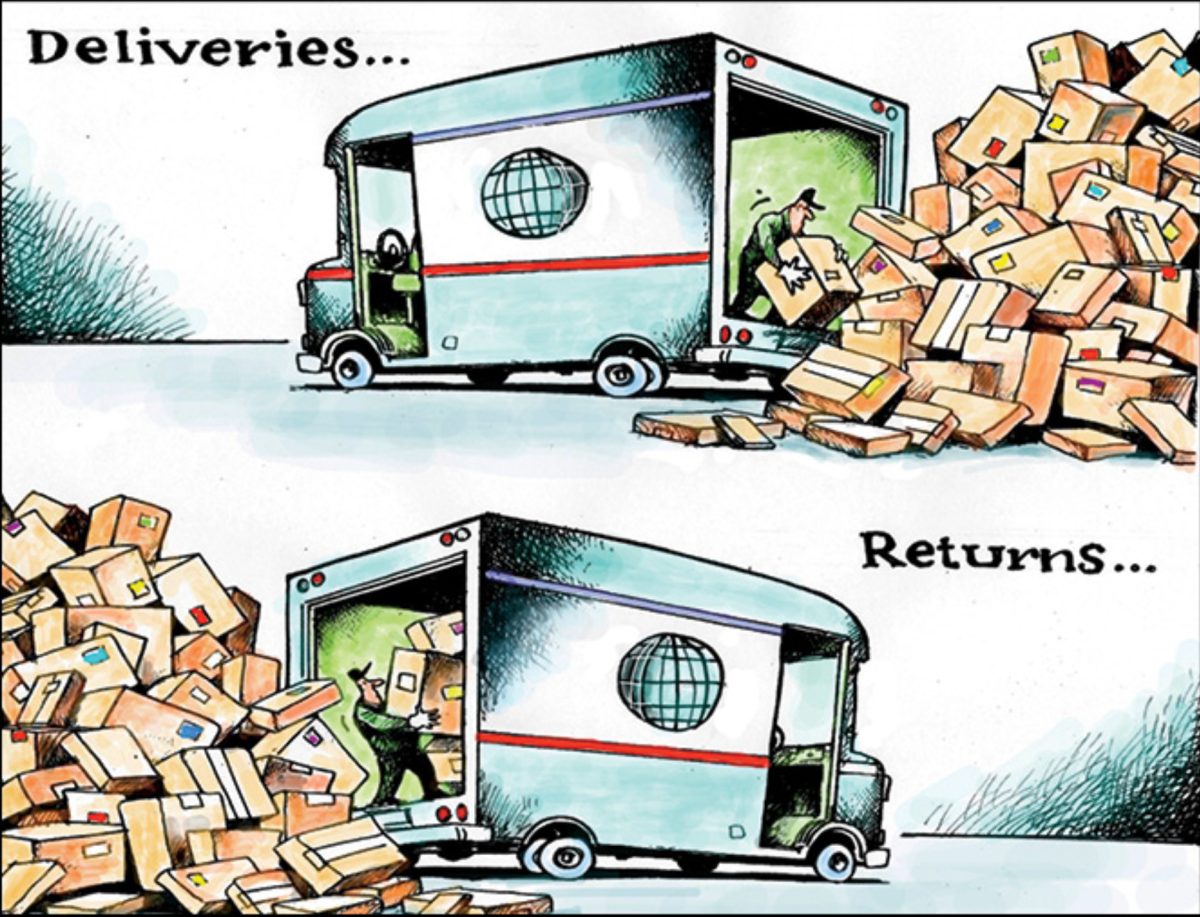
That culture of easy returns accelerated during the COVID-19 pandemic, as online shopping surged and physical stores shut down. Free returns became the norm instead of the exception. Today, the consequences are staggering, as the National Retail Federation finds that consumers returned more than $850 billion in merchandise in 2025 alone, accounting for roughly 17% of all retail purchases.
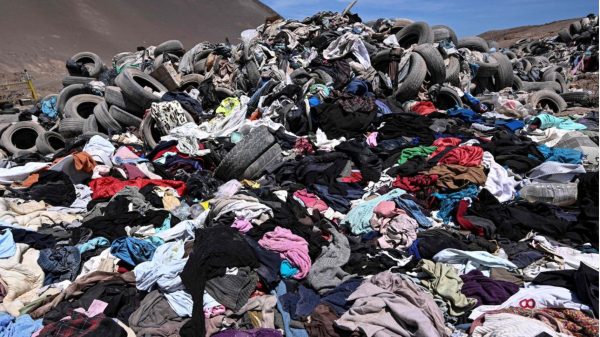
But what happens after an item is returned remains largely invisible to shoppers? Some products are resold to discount retailers. At the same time, clothing is not; open packaging, minor tears, or missing tags render items unsellable. Without the time, technology, or labor to process them, companies often choose the cheapest option: disposal. Consequently, BBC Earth reports that perfectly usable products are routinely sent to landfills simply because handling returns is too costly.
Yet, companies’ pursuit of profit often comes at the expense of the environment. A report by Optoro, a reverse logistics organization, estimated that online returns from the United States alone generate 5 billion pounds of landfill waste and 15 million metric tons of carbon dioxide emissions annually. Additional shipping, packaging, and processing turns minor inconveniences into major sources of pollution.
The economic harms are just as damaging. Retailers absorb shipping, inspection, and restocking costs, accumulating to approximately $816 billion annually. These costs, however, are rarely absorbed by companies alone. Instead, they are spread across consumers through higher prices, meaning even shoppers who never return items still pay for the system.
Beyond profits and pollution, these returns also have a social cost. As ScienceDirect explains, online returns also affect the workers who make and sell the products, who often face low wages, poor working conditions, and job insecurity. Increased returns mean more inventory to process, more pressure to meet quotas, and more customer complaints to manage.
Given the environmental, economic, and social consequences of online returns, meaningful reforms are necessary. Most importantly, policymakers and companies must introduce common sense measures to curb waste and emissions tied to online returns. Gene Detroyer, a professor of economics in China, comments that “companies should tell us the impacts before we click purchase. An informed customer is an empowered one.” After all, transparency from corporations enables consumers to make responsible choices.
Another effective solution is to implement return fees, reducing the incentive for consumers to return carelessly. Several retailers, including H&M and J. Crew, have adopted this approach and Amazon has recently introduced a fee of $1 per return. By charging return fees, costs shift to those who return carelessly, reducing waste while lowering prices for more mindful shoppers.
And though careless returns should be limited, this is not to say that all returns should be banned. If a product is damaged or non-functional, then by all means, the customer should be allowed to return the item. But we should be mindful consumers, make informed decisions, and advocate for responsible legislation.
So, the next time a package arrives at your door, remember the hidden cost of “free” returns. Remember that each return has a story—one that begins with a purchase but doesn’t have to end in a landfill. So, let’s make the hidden cost of “free” returns a thing of the past.