
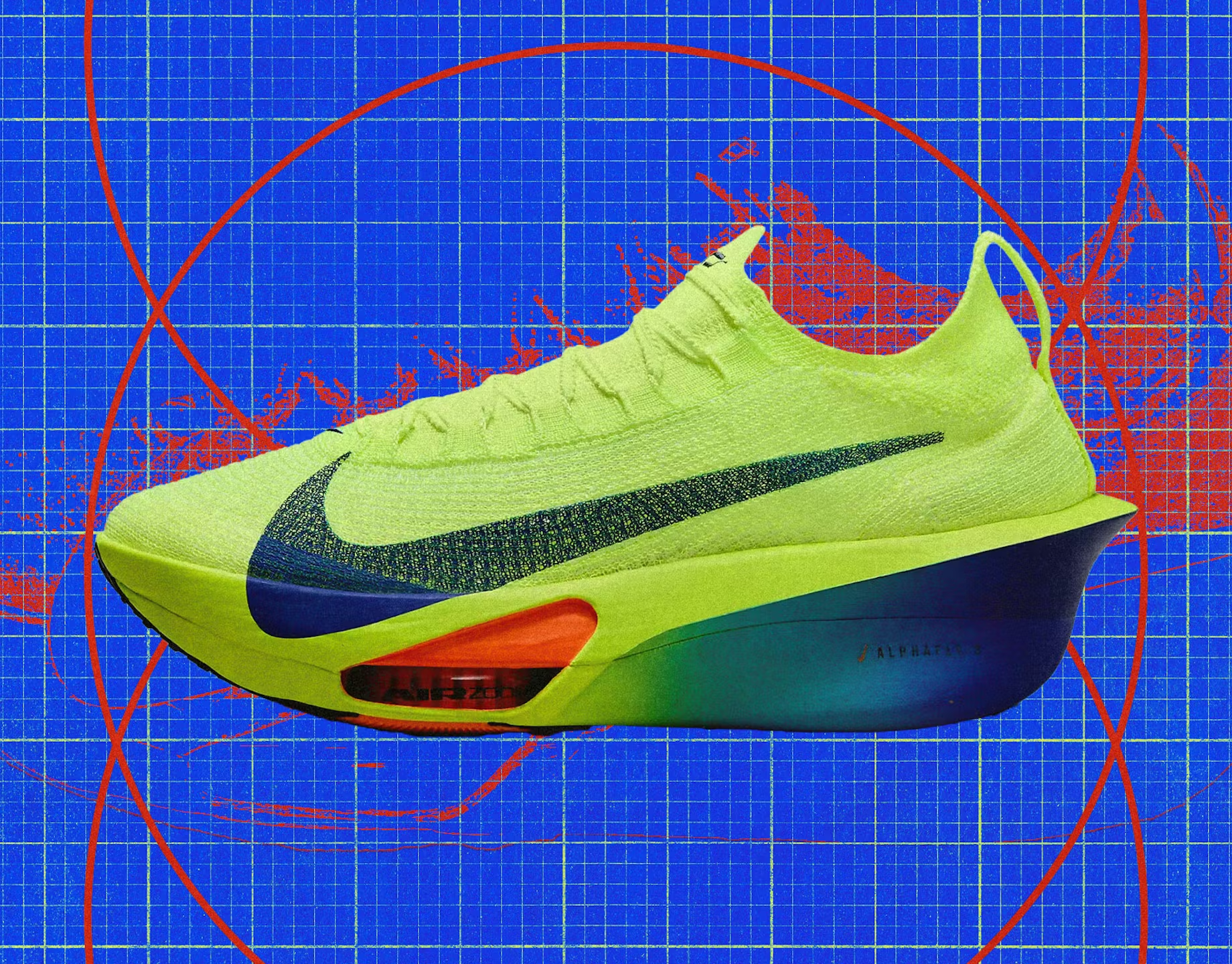
What if you could run faster, and it was as simple as wearing a special pair of sneakers? No, this is not the future. This technology is here, and the shoe already exists, with the combination of elite running and new technological advancements, and it is none other than the Nike Alphaflys.
After a famous racer became the first person in the world to ever complete a marathon under two hours in these same sneakers, the Alphaflys became an instant success. His record-breaking success eventually led to the shoe’s ban in future marathons. What makes the Alphaflys so fast are three technological advancements: the ZoomX foam, the carbon fiber plate, and the Nike Air Zoom technology. From solving a key issue many runners face to legal rule changes in major marathons, the impact the shoes had was massive on the world—even going on to reach other sports like track, basketball, and football.
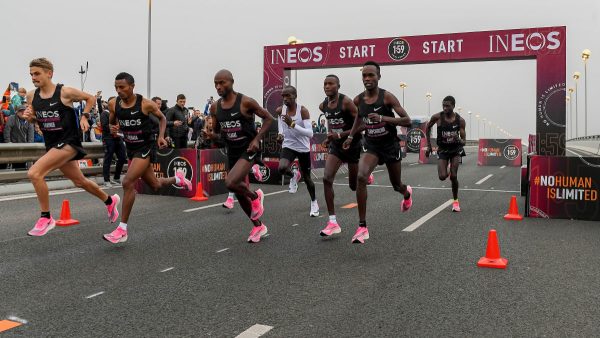
On October 12, 2019, Eliud Kipchoge became the first person in history to break the two-hour barrier in a marathon. In the city of Vienna, Austria, Kipchoge ran 26.2 miles in a world record time of 1:59:40:2 at the INEOS 1:59 Challenge. By completing this unbelievable achievement, he proved his own slogan that “No human is limited.”
He also gained status as one of the greatest runners of all time along with Sir Roger Bannister and his sub-four minute mile and Usain Bolt, who set the world record in the one-hundred meter dash. Kipchoge ran this marathon wearing the prototype Nike Air Zoom Alphafly NEXT.
The first main component of Alphaflys that makes it so fast is the “ZoomX” foam. Although it is difficult to measure how much energy a shoe returns, biomechanical testing can give estimates. Biomechanical testing observes the forces and motions in the human body, which results in improved performance, injury prevention, and recovery help. According to Inverse, “ZoomX” foam or Polyether Block Amide (PEBA) foam generates “87 percent energy return back to the runner.” Comparing that to other foams, EVA and TPU, which make up the soles of seventy-five percent of popular shoes, only returns sixty-six percent energy and seventy-six percent. ZoomX foam provides an extra layer of cushioning into its Alphafly 3’s, allowing more energy return. Alphafly 3’s is the third generation of the Alphafly line of shoes.
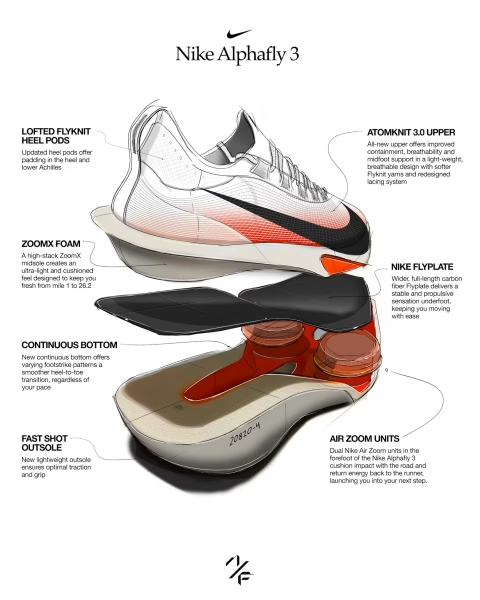
However, foam alone is not enough to make a super shoe. The second component of the Alphaflys that make it so fast is the carbon fiber plate. Many believed that the carbon plate acted as a “springboard” in the words of Inverse. However, a study done by Wouter Hoogkamer at the University of Colorado revealed that the combination of the foam and the plate as well as the shape of the plate played a big role in saving energy. To put it another way, the plate and the foam work together to benefit the runner. The plate alone or the foam alone is not nearly as effective.
The third and final key component of the Alphaflys is Nike Air Zoom technology. Air Zoom is special because of air pockets placed in the front of the shoe to allow extra energy return already provided by the combination of the carbon plate and foam. The air pockets are able to keep their shape because of tensile fibers, which allow higher pressure and more stability. The fibers also allow energy to return to the most beneficial parts of the foot. The combined force of the “ZoomX” foam, carbon fiber plate, and the Air Zoom technology allows Alphaflys to become the supershoe that allowed Kipchoge to smash the two-hour marathon barrier. Subtracting any of these crucial components from the shoe is not the same shoe.
Marathon runners are limited by their feet and how much pain they can tolerate. An anonymous person shared their experience of how tiring a marathon really is with Science News Explores, providing insight on why the Alphaflys had such a great impact on the sport. The runner revealed that when running the Boston Marathon, even with nine miles to go, their feet ached, thighs tightened up, back ached, and the soles of their feet hurt. While the person wanted to compete at the New York Marathon, they were hesitant due to having a cracked shin bone from a marathon the previous month.
This led to the person’s lack of confidence in their body’s ability to handle the long distance. Nike developers and scientists especially kept this problem in mind when designing their shoe to be the next breakthrough product. To further accommodate their customers, Nike has a research lab located in Beaverton where they let professional athletes use high-tech running platforms to help them improve their shoes, like the Alphaflys.
When Kipchoge ran his sub-two-hour marathon, it led to new rules in official marathons, banning the Alphaflys. The new rules stated that the shoe can only have one carbon fiber plate maximum and a midsole height no higher than 40mm. To be under the new rules, Nike released the Vaporflys. These shoes won 31 out of 36 podium positions at major marathons in 2019, leading to some considering it technological doping: the act of using sports equipment to gain a competitive advantage.
While the Alphaflys are designed for long distances like marathons with more cushioning and stability, the Nike Vaporflys are suited for shorter distances like five kilometers to half-marathons with less weight and more nimbleness. Their similarities include having the ZoomX foam and a carbon fiber plate. In peer-reviewed studies funded by Nike, it found that the Vaporflys increased running efficiency by four percent and speed by 3.4 percent.
Ultimately, Nike designed the Alphaflys to be so fast that it became a major factor in the world’s first sub-two-hour marathon, leading to its own ban in major marathon events and controversies over technological doping. However, its technology is so influential that it expanded into other sports like track, basketball, and football. For example, Nike developed new spikes for track athletes: Nike Victory 2 and Nike Maxfly 2; a new basketball shoe: Nike G.T. Hustle 3; and a new football boot: 2024 Nike Air Zoom Mercurial. This matters because it reveals how a few small tweaks in a shoe can rewrite history, spark debate, and expand a sport’s future.