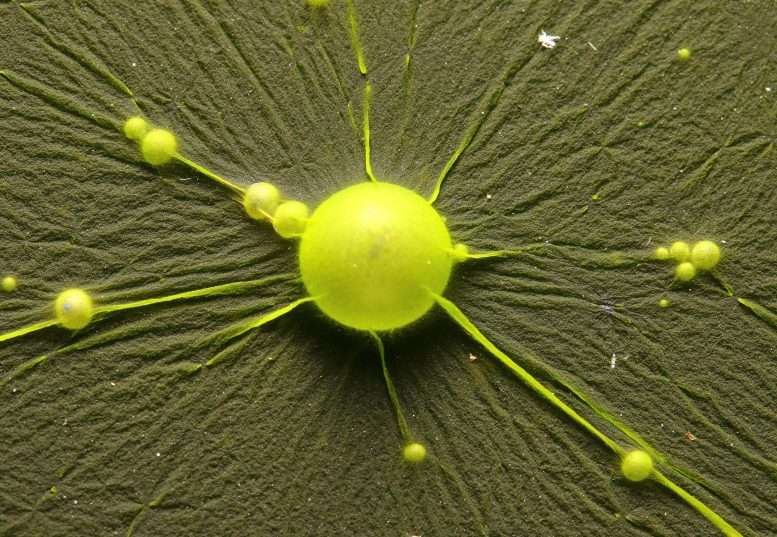
Found on the volcanic coast near Vulcano Island of Italy, this green mutant might be the solution to climate change.
UTEX 3222, nicknamed Chonkus, is a mutant cyanobacteria, a heavy, dense strain of algae that can produce energy by photosynthesis. American and Italian researchers were collecting water samples in areas with very high levels of marine carbon dioxide when they discovered the naturally flourishing Chonkus, a mutation of S. elongatus, in the carbon-rich waters near Sicily’s Vulcano Island.
Chonkus sports the textbook definition of unappealing, with its round and heavy “chonky” shape and slimy blue-green hue. However, researchers from the Wyss Institute, Weill Cornell Medical College, MIT, and more launched a field study and discovered that Chonkus has valuable traits which most algae don’t have, making it a suitable candidate for projects aiming to capture and bury carbon. Chonkus could be the key for research on decarbonization and combating climate change.
What makes Chonkus unique?
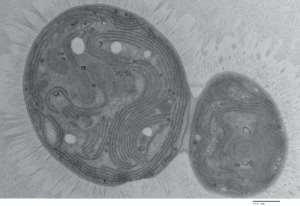
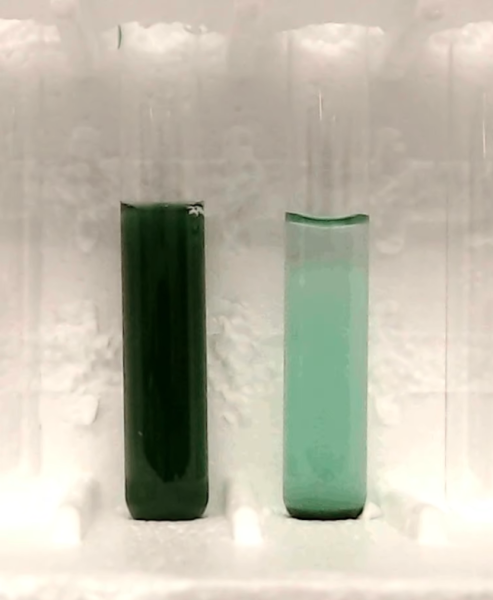
Just like any superhero, the mutation that gave rise to Chonkus also gave it superpowers (in a sense). While S. elongatus is well-known in the scientific community for its capability to grow quickly, Chonkus grew larger than other cyanobacteria when cultured in a lab, creating dense colonies. Similarly, Chonkus’s large, white carbon-storage granules enable it to store more carbon than other strains of S. elongatus.
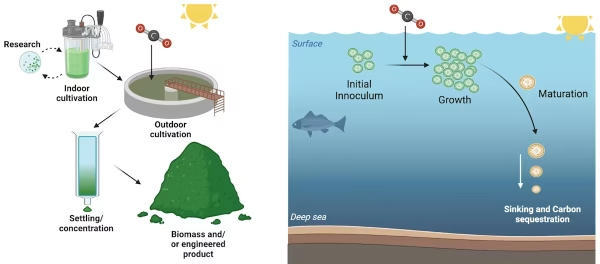
Thanks to its uniquely carbon-rich volcanic environment, Chonkus used carbon to galvanize its growth. These two traits combined allow for Chonkus to store carbon, then sink rapidly to the sea floor like “green peanut butter,” according to Max Schubert, who discovered Chonkus with another Harvard alumnus, Braden Tierney.
This makes Chonkus perfect to address the climate crisis through carbon sequestering: when carbon is captured and stored to reduce the amount of carbon in the atmosphere. Compared to the current alternative–algae produced industrially at high costs–Chonkus is a pre-adapted solution that chomps up and stores carbon, a boon for industries looking to shave off roughly 15 to 30% of production costs.
Chonkus is especially key now in a world where carbon dioxide emissions trap heat on Earth, accelerating warming and putting ecosystems at risk of collapse. With over forty billion tons of carbon dioxide just last year, according to the Global Carbon Budget, carbon sequestration is more important than ever in the fight to save our planet.
And one of the authors of the study, Braden Tierney, has emphasized how important it is to find solutions, like Chonkus, in nature. Harnessing the microbial diversity that exists in the wild is far more efficient than engineering traits into lab-grown bacteria. making microbes like Chonkus critical.
As scientists delved deeper into Chonkus, other potential versatile applications in the biomanufacturing industry were revealed, including high-efficiency carbon sequestration and manufacturing nutritional supplements like omega-3 fatty acids, antioxidants, and superfoods such as spirulina.
Admittedly, to gain a deeper understanding of Chonkus and its possible use, further research on safety is required, particularly to prevent harming natural ecosystems and to develop methods to confine its growth. However, Chonkus, a mutant of a simple billion-year-old microbe, still remains a promising rediscovery of nature that may help tackle climate change.
The discovery of Chonkus also fueled Tierney to co-found The Two Frontiers Project, a non-profit dedicated to studying how organisms survive and naturally adapt to extreme environments. Their expeditions are in search of the ‘next Chonkus’: another microbe whose latent skills could hopefully help not only capture carbon but also upcycle it, contributing to coral restoration. Chonkus may be the pioneer of its kind, but it won’t be the last micro-superhero to save us from climate change. However, even as scientists hunt for the next Chonkus, the greatest mystery still lies with Chonkus itself: what secrets is it keeping from us?