
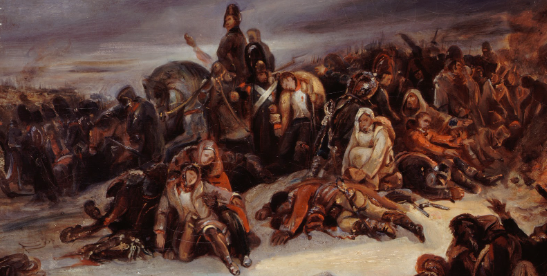
If not for the disastrous invasion of Russia in 1812, we might very well be speaking French right now. If Napoleon was successful in his invasion, he would have been able to solidify his hold of continental Europe, and then focus on Britain. And if he was successful in conquering Britain or at least severely minimizing its power, it is believed he would have turned his attention west, towards the Americas. But we aren’t speaking French right now—so what happened?
Napoleon’s invasion of Russia was a complete disaster. In addition to failing to acquire new territory, of the 600,000 strong army (100 times the size of the U.S. ‘s army at the time), less than 50,000 made it back to France. By losing most of his experienced soldiers, Napoleon was no longer able to maintain his vast European empire and grew increasingly unable to defend his territories against British and rebelling Spanish troops. Less than 2 years later, the allies, led by Tsar Alexander of Russia, took Paris and forced Napoleon to abdicate.
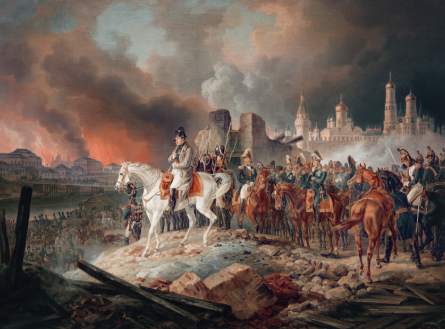
New studies have shed light on what really doomed Napoleon’s army during his invasion of Russia. Until recently, it was believed that Napoleon’s army was killed due to the strong winter of 1812, starvation as a result of failed supply lines, and most importantly, a typhus epidemic. Yet the finding of a mass grave near Vilnius, the capital of Lithuania, rewrites that presumed history.
The mass grave contains the remains of French soldiers who did not die from conflict, but who instead died more peacefully (they were buried with their horses and without weapons, signifying that this was not a post-battlefield burial). By being an excellent source of non-battlefield related deaths, the mass grave allowed researchers to better analyze causes of death for Napoleon’s troops that were not a direct result of armed conflict.
What DNA Traces Reveal
The researcher team agrees that it is undeniable that freezing conditions and inadequate French supply lines killed large portions of Napoleon’s Grande Armeé, yet the team wanted to find out if typhus really did plague the army. To fact-check the typhus theory, the researchers turned to their best friend: DNA. If a cause of death, typhus, like any pathogen, should have left traces in the soldier’s DNA. For their source of DNA, they chose the soldier’s teeth. Teeth, along with bones, are one of the best sources for DNA from a deceased person’s body due to the small blood vessels that traverse them, allowing DNA to be sometimes left on the outside of these vessels when a person dies.
Yet as with any decomposed body, it is extremely hard to recover clean, unreacted DNA to analyze. Instead, the researchers were forced to use very short, degraded fragments to later examine. After conducting their analysis of the DNA, they filtered out any modern DNA that had contaminated the samples through a technique known as “high-throughput sequencing”, which allows for the sequencing of large amounts of DNA fast. In doing so, HTS (high-throughput sequencing) allows for studies to be conducted between microorganisms and their respective environments, which was exactly what the researchers needed to do with the Frenchmen’s DNA.
What the researchers discovered was unexpected at the very least. Four of 13 soldiers had paratyphoid fever and two had relapsing fever when they succumbed to their deaths. The former is caused by a type of salmonella bacteria that occurs due to food or water contamination, demonstrating that the retreat back from Russia was haphazard and disorganized. Meanwhile, relapsing fever is transmitted by body lice and ticks, hinting at the unsanitary conditions of the Grande Armée. Both bacterial infections cause fever, headaches, and muscle weakness.
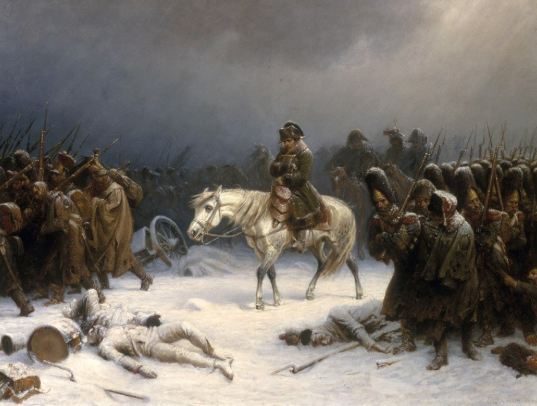
The symptoms of found pathogens match historical records and further serve to prove the researchers’ theory. Their research has shown that typhus was not part of the pathogens found, debunking the theory that a typhus epidemic decimated the army. Instead their research further confirms the success of the Russian strategy of tactical retreat, in which they burned their crops and fields to leave nothing for the French.
The French, finding themselves deeper and deeper in Russian territory with a more fragile supply chain as winter had begun to set in, were forced to retreat as fast as possible. The retreat turned haphazard due to constant Russian bombardment that destabilized the army, forcing smaller units to often fight and to get food for themselves, without any outside reinforcement. This caused conditions to plummet, which in turn led to an outbreak of diseases caused by a lack of sanitation and transferred by ticks or rodents, as seen in the bodies found at the Vilnius grave.
A Strategic Failure
With so much stacked against the French, Napoleon’s invasion of Russia in 1812 is regarded as one of the biggest strategic failures in the history of war. After his retreat back into allied territory, Napoleon no longer possessed a strong, capable, and well-trained army full of experienced veterans; additionally, his loss reinvigorated his enemies in the Sixth Coalition to wage war against France with the goal of forcing France’s capitulation.
Ironically, the doom of Napoleon was his failure to realize where true enemies can lie and with which enemies there is no negotiation. As the team’s research confirms, his army was never truly crushed in battle, instead it was crushed from within by disease, unsanitary conditions, and a haphazard retreat.