

Imagine waking up one day and being unable to cook your favorite meal, or even remember the names of your family members. While you may think this is unlikely, scientists have discovered that these scenarios are becoming more common as pollution increases the risk of Alzheimer’s. Alzheimer’s disease is a disorder that impacts the brain’s nervous system, preventing brain cells from completing simple, daily tasks, and does not have a known cure. Millions of people are already struggling with it, and the numbers are only increasing. Places with huge amounts of pollution are especially at risk, including our very own state of California.
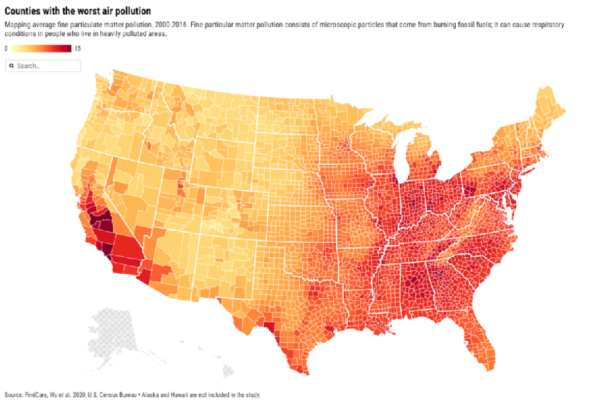
Living in a highly environmentally polluted place means that the risk of Alzheimer’s becoming more common is even greater. Because we live in California, the number one most polluted state in the nation, our bodies are already experiencing unhealthy levels of air quality, which will only continue to get worse. Pollution slows down the ability of brain cells to communicate messages throughout the body quickly, which can be a severe problem because our bodies heavily rely on clean air to function.
With a decreasing amount of pure air for our bodies to work off of, our brains are severely harmed, leading to memory loss and difficulty completing daily activities. Cell damage due to poor air quality is a major factor of Alzheimer’s. In the past, the disease mainly impacted elderly people, but as contaminated air levels worsen, more and more younger people begin developing the disease.
What is Alzheimer’s?
Alzheimer’s is the reason for eighty percent of memory loss cases, and is caused by factors such as genetics, increased brain proteins, and now, it seems, environmental pollution. Even though it is a disease that impacts our brain, our brain cells control the whole body, so it really has an effect on everything we use to function. Dementia, mobility loss, mood swings, and difficulty in completing tasks such as cooking, or speaking with others efficiently are all common struggles that people with Alzheimer’s may face.
Scientists do not know what the disease specifically affects in our brain, so if diagnosed with Alzheimer’s, there is no way to cure it. Researchers think that the disease mostly impacts brain cells’ ability to communicate or receive information. As the amount of pure air that we intake decreases, our brain cells become damaged more easily, allowing Alzheimer’s to become a risk to those younger than expected.
Pollution’s Effect
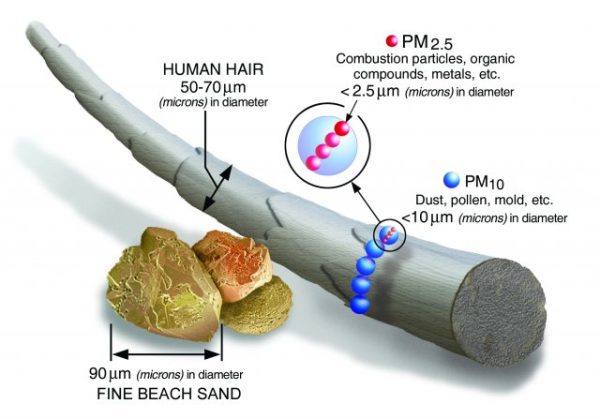
Around 40% of America is breathing in toxic amounts of air pollution, or in other terms, well over 100 million people. Greenhouse gases, high amounts of trash, wildfires, or gases from vehicles are all causes of the poor air quality that we face. Even though it looks like clean air, we are actually breathing in particles of matter that consist of dust, smoke, dirt, and chemicals. Inhaling these particles causes the rapid accumulation of toxins in the brain and therefore accelerates the process of getting Alzheimer’s disease.
A study by Penn Medicine claims that, “For every increase of PM2.5 [fine particles in the air], the risk for worse Alzheimer’s disease amyloid [proteins that build up outside a brain cell] and tau [proteins that build up inside a brain cell] build up increased by 19 percent.” The study also states that this insidious increase happens within only a year of living in a highly polluted environment, much like the one that we live in. This means that the more polluted air particles that enter our bodies, the faster Alzheimer’s develops and the more common it becomes.
Conclusion
The discovery of air pollution and Alzheimer’s disease unveils the challenges that humanity will face, now and in the future, with regard to health because of worsening air quality. With just microscopic air particles, the brain can be irreversibly damaged. Difficulty recalling special memories, doing tasks that you used to love, conversing with family and friends, and even remembering the name or importance of the person you are with are all challenges that people with Alzheimer’s face daily.
While we all know that the issue of pollution is way past the point of being solved, the research on air pollution’s connection to dementia leads to an urgent question: How can we do our part to slow down the escalation in air pollution and its link to the risk of the disease? Recognition of the issue is the first step to preventing all of us from becoming diagnosed with the tragic disease known as Alzheimer’s.