

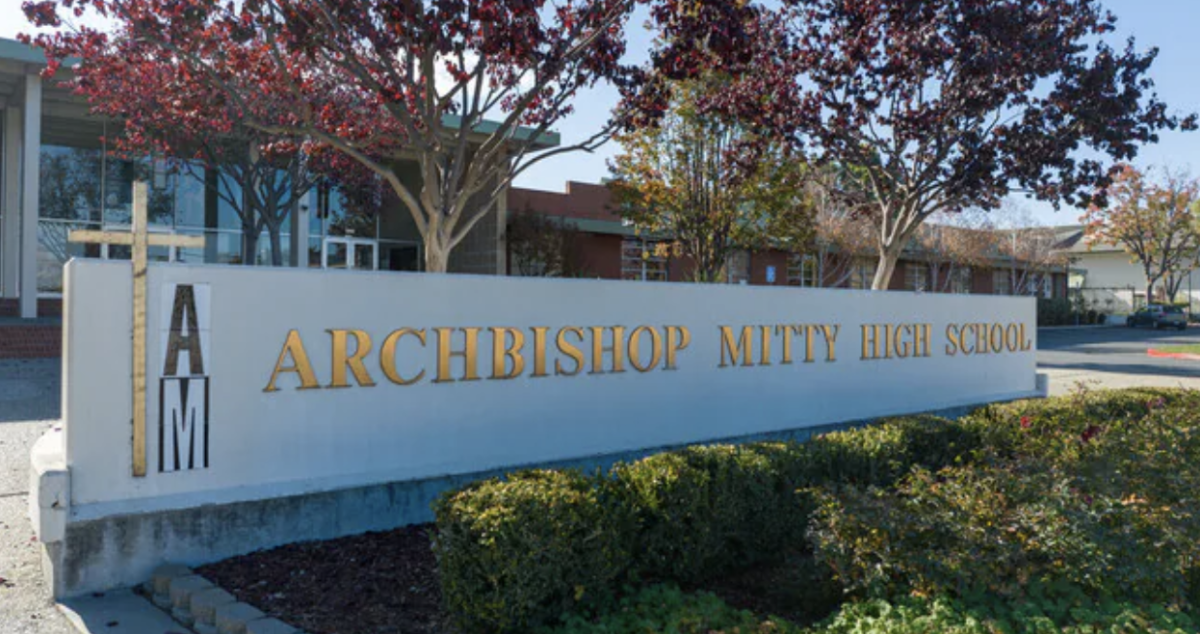
Rules are an important part of any school. They decide how much freedom students get, how teachers run their classes, and what the campus feels like each day. To find out more about Mitty policies we had in the past, I talked to current teachers who lived through them.
One of the policies that has changed over the years is whether students can leave campus during lunch or off periods. With school lunch prices going up, having the option to leave campus could be a benefit for students who want cheaper or different food choices.
When Ms. Bollinger, a social studies teacher at Mitty, went to school here in the early ’90, off-campus lunch was totally normal. Even though there were some on-campus options such as french fries, hamburgers, and chicken hoagies, there was not a full lunch program on campus.
“Back then, we had off-campus lunch and many students went off campus during their off periods,” she said. “More students drove themselves, and there were not many rules about having other teens in the car with you.”
But of course, this policy would have some problems if implemented today. Currently, with a larger student body, traffic getting into and out of Mitty can become a hassle. “Lunch periods were probably longer, and there were fewer students back then, so traffic in and out of the parking lot was not as big an issue,” Ms. Bollinger said.
She also said, “Some students weren’t great at following rules, which is probably why the policy changed after I graduated.” However, with clearer rules and logistical planning, off-campus lunch could give students more diverse food options and even help them practice time management skills.
Another policy that has changed is the length of class periods. With the current block schedule, students now have longer classes. However, shorter periods could help keep students engaged and provide daily interaction with teachers.
When Mr. Miller, a social studies teacher and swim coach, first started teaching at Mitty in the late ’90s, classes were 55 minutes long compared to the current 75 minutes.
“When I taught eight classes a day, there was always a benefit to seeing your students every day—it helps with content and skill retention,” he said. Shorter classes might actually help students stay focused and avoid feeling burned out by longer periods.
However, Mr. Miller pointed out that the schedule wasn’t perfect and that, as a teacher, he wasn’t able to engage students with the content they were learning on a deeper level. “There wasn’t a lot of time for in-depth activities or projects,” Mr. Miller said. “It felt like we were constantly moving from class to class without a chance to take a breather or reflect on what we were learning.”
With longer periods now, students have more time for discussions and projects, which was limited under the shorter schedule. Mr. Miller also noted that “short periods forced a fast pace that some students found overwhelming,” which could make it harder to dive deeply into complex topics.
Therefore, a balance between longer and shorter periods would be most ideal. Shorter periods could keep lessons more engaging and help students stay focused, while longer periods could allow for projects and discussions.
Ultimately, reintroducing some of these past policies, such as a balanced class schedule and the option for off-campus lunch, could benefit students while still keeping the school environment well-managed and productive.