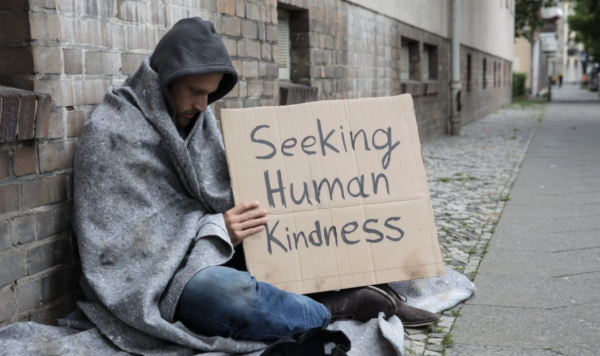

It’s often said that “home is where the heart is,” but for more than 770,000 individuals there is no home to return to. California long stood at the center of this issue, accounting for nearly a quarter of the nation’s homeless. But as the problem drags on, many organizations have made it their mission to support the destitute and forgotten and contribute to long-term solutions.
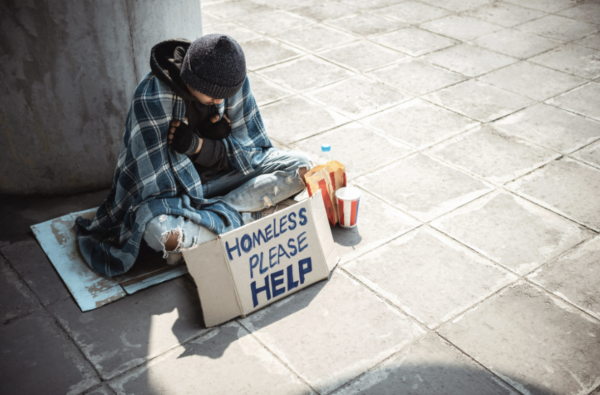
Destination: Home is one such organization, a unique semi-public nonprofit aimed at ending homelessness in Silicon Valley. This group has targeted the problem through a different approach, investing tens of millions of dollars into preventative measures: providing millions of dollars to at-risk families and pushing for housing reform. Since 2017, Destination: Home has stabilized 33,000 families in crisis, with over 90% of the families remaining housed two years after receiving help. It’s the only public-private partnership dedicated to addressing homelessness in the Bay Area. It has repeatedly been lauded for its efficacy—a gold standard for homelessness intervention across the nation.
Given the growing enormity of the crisis, we sat down with Destination: Home for an interview. Below are the questions (in bold) and the paraphrased responses of Mr. David Low, Senior Director of Public Policy with Destination Home.
Homelessness is inherently an economic challenge. How have recent economic fluctuations (rising prices for core goods, sluggish job growth) affected your prevention network?
There isn’t one single cause to homelessness; economics definitely plays a role, but there are many other factors that contribute to the crisis. Still, the problem is an economic issue at its root, with out-of-control rent and the rising cost of living pushing more and more individuals into homelessness. As costs grow higher, we do see a lot more risk and more people on the streets. However, programs targeting housing affordability have remained disproportionately effective—in comparison to other municipal initiatives.
Other Non-Governmental Organizations (NGOs) have highlighted that support falters once folks are off the streets. Is that an issue you’ve noticed in your work?
Homelessness often isn’t the final struggle—it’s a trigger to lingering issues. So recidivism in just-housed individuals has often been a problem. So far, we’ve been successful in continuing to check in with the folks we’ve been helping. The goal of Destination: Home is to provide a supportive housing program, one that doesn’t just stop at providing an affordable home. From connecting individuals with ongoing struggles in the program to mental health or rehabilitation programs to providing a guaranteed income program, we don’t want to leave our work at the doorstep. Half the battle is fought in the first months of rehousing.
Some narratives circulating online suggest that homeless people don’t seek or want external assistance. What has been your experience with this?
This is a myth for sure: that these people don’t want these programs. In my experience, there hasn’t been much of an issue with interest among the homeless population. Just from a logical perspective, unhoused individuals want all the support they can get, but are often thwarted by inequitable resource distribution or external factors. That sort of gives justification for cutting resources for unhoused individuals—feeding a vicious cycle where unhoused individuals get fewer and fewer resources; then they are seen as not taking the opportunity to lift themselves up, leading to cutting even more resources.
Regarding the capacity side of the issue (lack of homeless shelters, affordable housing units) what policies have recently been passed?
There’s definitely been much more funding recently. California itself has invested over 100 billion dollars in hopes of alleviating this crisis. They’ve built homes for around 5,000, maybe even 6,000 individuals. The extremely low income (ELI) households (those earning below 30% of the area’s median income) have been a priority with the allocation of housing dollars—extending funding to 15,000 to 16,000 additional individuals. I think in sum they’ve gotten 45% of the total funding. The whole thing has been a sort of an experiment, too—the jurisdiction wants to see how well direct financial assistance initiatives work in keeping people out of homelessness before investing more money.
What do you think about California’s new policy of clearing homelessness encampments?
This isn’t a black or white issue as it’s often been framed. But it clearly impacts individuals even beyond the encampments, contributing to a negative overall social attitude toward the plight of homelessness and the incentive to actually do anything to solve the problem at the root. Adding criminal penalties on top of everything these individuals are facing has definitely made things more difficult.
In my experience, there’s been a general apathy toward funding initiatives for these homeless people. People believe homelessness is a top issue, but they delusionaly want quick and easy solutions. There is no quick or easy solution. It’s easy to just want to “end homelessness,” but it’s hard for the average Californian to fork up the additional tax dollars to truly make a difference.
Any solution will take decades before yielding real results, so the price often feels unjustifiable. When it comes to policy, we need honest conversations on the scope and nature of any homelessness policy. Politicians pitching “easy solutions” oversimplify the difficult nature of policy. Again, there is no easy solution.
But I can say that if we invest in prevention, there’ll be a lower per-person cost, especially in the long term, when you see annual costs of $62,000 being spent on curbing the problem today. I think the encampments are definitely a step back from any feasible solution—it simply doesn’t solve the problem.
What are some common misconceptions people have about homelessness?
Definitely that drugs are involved, which isn’t always true. Most people become unhoused because of mental illness, sudden layoffs or an unexpected major expense—not because of substance use. Homelessness isn’t a personal failure; it’s a matter of circumstance.
People may develop drug issues on the street, but drug usage generally isn’t the cause of homelessness itself. Another misconception is that homelessness can be solved without addressing the housing crisis. But these two are interrelated; one can’t go without the other being fixed.
What can high schoolers do to help the homeless?
High schoolers can learn more about the issue. Right now, many people know the most surface-level information but not much beyond that. We’re seeing many people—particularly the youth—lose depth of the issue. It’s very easy to say “oh, we just need affordable housing” and brush the issue off, but homelessness is a systemic problem. It’s not an issue that can be solved with just one simple solution. And everyone can help. High schoolers can get involved and advocate for solutions at city hall or petition their representative.
Mitty itself offers countless opportunities to help, with immersion trips such as Habitat for Humanity being centered around building homes to increase California’s housing capacity. Other nonprofit agencies aimed at alleviating the issue include Second Harvest Food Bank and CityTeam (which provide food, shelter, and clothing to people in need). So if you’re suddenly struck by a sudden desire to help out—or still need to fulfill your service learning requirements—you can extend a helping hand to your local community, supporting those who need it most.