

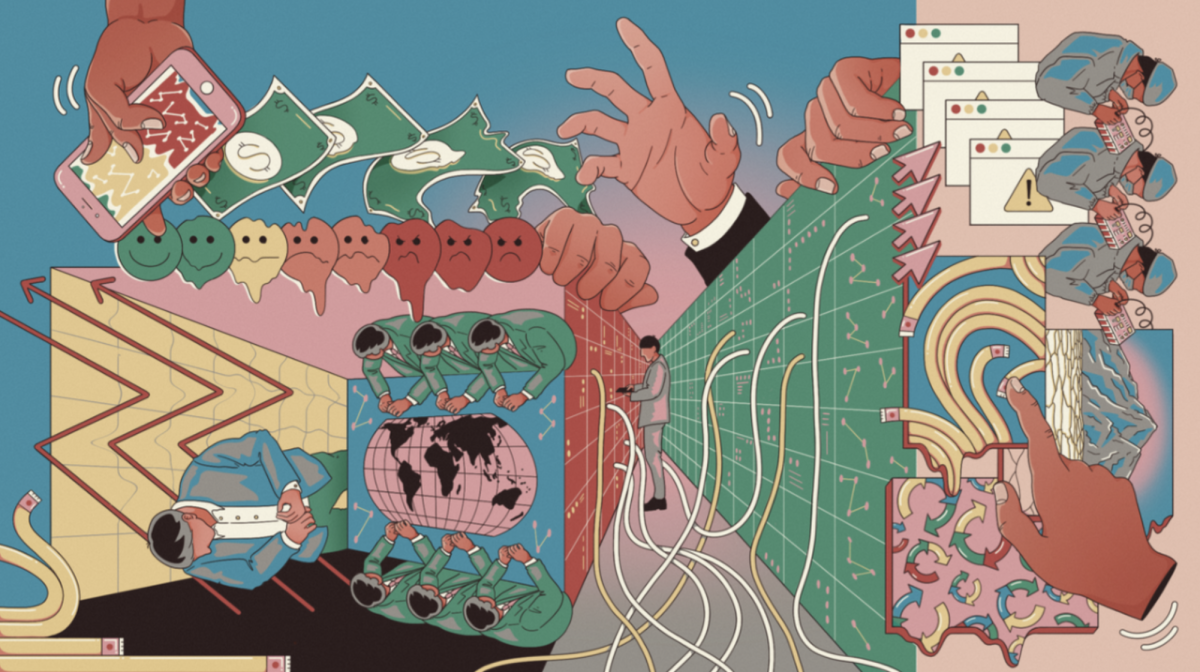
AI is the future, but not for everyone. Expected to be worth up to $1.8 trillion by 2030, this industry could entirely reshape the global economy. But behind this staggering number lies an uncomfortable truth: while AI promises innovation and equality, it could also be the most powerful tool of exploitation anyone has ever seen. The real question is this: who will pay the price?
Over the past few years, artificial intelligence has achieved practically everything, from revolutionizing healthcare to automating repetitive tasks and even offering emotional and psychiatric support. While CEOs and tech advocates often boast about the impacts, claiming that they will “level the playing field,” what’s often overlooked are the darker consequences of this technological boom.
While the Global North may benefit tremendously from these advancements, the picture is far less hopeful for the Global South. In these regions, where political and socio-economic inequality is rampant, AI risks deepening inequality that has existed since the colonial era. 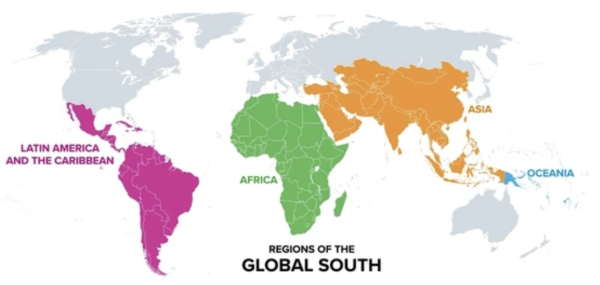
The challenge begins with a lack of technological infrastructure. Artificial intelligence is a complex technological asset, requiring not only extensive equipment, but also reliable internet connectivity, power grids, and regulatory systems to sustain it. In sub-Saharan Africa, for example, only 30% of the rural population has internet access. How can AI companies expect to develop and scale their services in such a digital landscape? Without the foundational resources that developed nations often take for granted, AI simply becomes a luxury out of reach for most of the Global South.
This is not to say that the Global South lacks technological innovation. Across Africa, Asia, and Latin America, researchers and community groups are working to develop AI tools tailored to local languages, needs, and cultural contexts. In other parts of this area, grassroots organizations, notably Ghana NLP, have already taken steps to develop tools and the necessary infrastructure. Progress is certainly plausible, but the scale of the challenge is immense.
Even if the infrastructure expands, there remains the daunting issue of regulation. Researcher PJ Wall warns that without proper federal oversight, the militarization of AI, especially through autonomous weapons, is practically inevitable. Furthermore, unchecked AI development could escalate into widespread surveillance, threatening individual rights in resource-constrained societies. In environments where institutions are already stretched, the risks of misuse or abuse are especially acute.
Many structural vulnerabilities that persist between the two regions further exacerbate the problem by feeding into a larger concern that scholars have described as digital colonialism: a pattern in which technological power, data ownership, and economic value flow predominantly from the Global South to the Global North. AI’s expansion in the Global South is often shaped by Northern perspectives, resulting in a new era of colonialism. The Global North benefits from the labor and resources it collects from the South, while offering little in return. Developing nations are often viewed as passive recipients of novel technology, not as equal contributors to innovation.
To make matters worse, the resulting imbalance is especially visible in the global labor that sustains AI systems. Many of the workers performing the most essential tasks—such as data annotation, content moderation, and classifier training—are based in Kenya, India, the Philippines, and other lower-income regions. In 2023, for example, reporting by Time revealed that hundreds of Kenyan workers were paid as little as $1.30 to $2 per hour to review graphic and traumatic content used to train large language models. These workers are integral to AI development, yet they remain invisible in the global narrative of progress.
The environmental footprint of AI adds yet another layer of complexity. A study from the University of Massachusetts Amherst found that training a single AI model can emit over 284,000 kilograms of carbon dioxide, equivalent to the lifetime carbon footprint of five cars. As AI development accelerates, these demands will grow, raising questions about who bears the environmental costs of technological progress.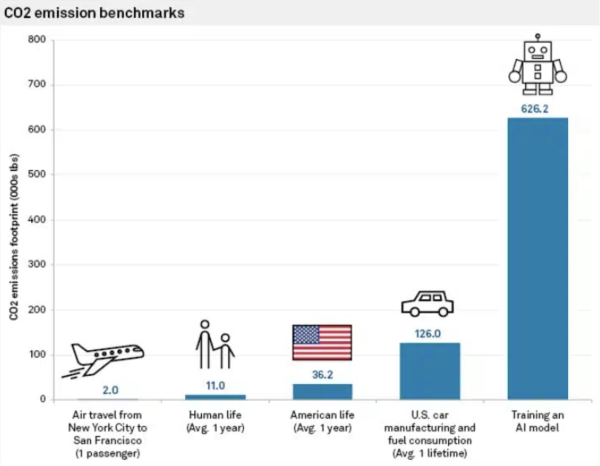
Across the Global South, workers, communities, and governments are already absorbing the environmental, social, and political costs of a system designed elsewhere and controlled elsewhere. So when we ask “Who will pay the price?” the answer becomes clear.
The challenge is ensuring that AI’s global expansion does not replicate existing inequalities but instead provides meaningful opportunities for those historically left at the margins. For policymakers, educators, and technologists, this means involving developing nations in setting standards, supporting local innovation, and recognizing the human labor embedded in every AI system. Unless global inequality is addressed at the core of technological development, the cost of progress will be carried by the people who are least able to influence it.