

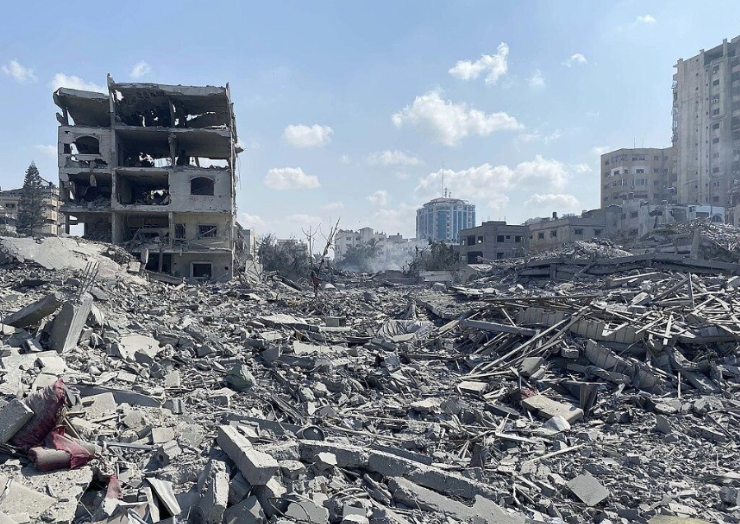
On November 17, 2025, the United Nations approved President Trump’s new peace plan for the war in Gaza. At this point, about 70,000 Palestinians have died in the attacks since October 2023, when Hamas released a highly coordinated and unexpected attack on Israel on the 7th. 2,000 Israelis thus far have been killed in the war, including 900 that were killed on the October 7th attack alone
The plan called for an “International Stabilization Force” to enter and demilitarize Gaza. The resolution also mentions a “Board of Peace” to oversee this process; however, it wasn’t completely clear what would make up the board. However, what was clear in the resolution was that President Trump would chair the Board of Peace.
The vote in favor of the resolution was almost unanimous: the U.K., France, Somalia, and 10 other countries voted for the plan, while Russia and China abstained. The 20-point plan also calls for the Palestinian statehood and self-determination, which Israel still strongly opposes. For many years, the Jewish-majority nations have clashed with Muslim-majority nations, and this conflict still continues today in the Israel-Hamas War.
However, many other Arab and Muslim-majority nations strongly urged its immediate implementation. 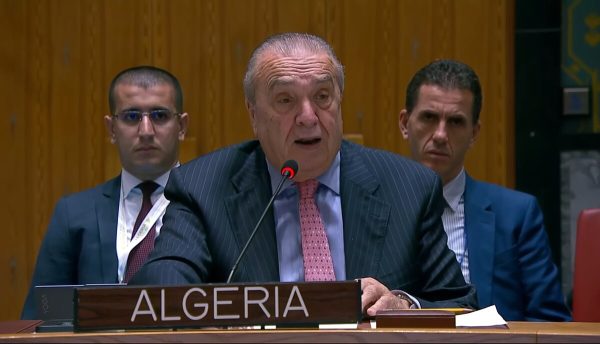 Algeria’s ambassador, Amar Bendjama, who represented the United Nations’ Arab Group, said, “Genuine peace in the Middle East cannot be achieved without justice, and justice for the Palestinian people, who have waited decades for the creation of their independent state.”
In 1948, the Arab-Israeli War took place, which was when Egypt, Jordan, Syria, Lebanon, and Iraq invaded Israel to defend the Arab inhabitants so that it wouldn’t become a Jewish state. However, Israel won that war, In the Israel-Hamas War, while countries like Iran did support Hamas during the ongoing conflict, most of the Muslim-majority nations stayed out of the war.
A month ago, Hamas agreed to President Trump’s proposed ceasefire and hostage release, the first phase of the resolution. In early October, Israel and Hamas agreed to the first phase of Trump’s peace plan, which involved Israeli troops required to partially withdraw from Gaza. About 50 hostages were returned safely back to Israel after the ceasefire, and Israel was required to send 400 aid trucks to Gaza within the first five days of the plan.
The second phase focuses on rehabilitating the West Bank by forming a transitional governing body. While the specifics, such as who would lead it, aren’t stated yet, this would mean a body to the direct rebuilding of Gaza physically and economically. The Board of Peace would assume this role, with a goal of bringing the Gaza Strip back to economic stability and reconstruction. However, it still isn’t clear how Gaza will be rebuilt and returned to stability.
Although the resolution promises restored order in Gaza, several nations have criticized it due to its ambiguous timeline and planning. Russia and China criticized the treaty for its lack of specific detail on certain aspects, such as the composition of the Board of Peace. Russian ambassador Vasily Nebenzya noted this, saying that the U.N is “giving its blessing to a U.S. initiative on the basis of Washington’s promises, giving complete control over the Gaza Strip to the Board of Peace and the ISF (International Stabilization Force), the modalities of which we know nothing about so far.”
 The ISF is another aspect of the resolution that proposes to bring Gaza to peace. Working alongside the Palestinian police, the ISF is tasked with securing border areas and disarming armed groups in Gaza, including Hamas.
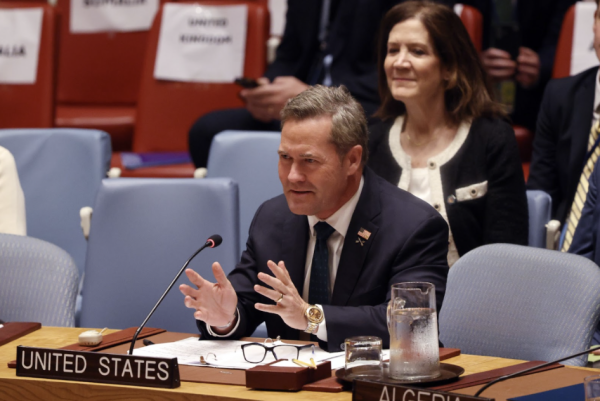
Mike Waltz, the U.S Ambassador who spoke at the U.N. conference, said that the ISF’s mission would include “securing the area, supporting the demilitarization of Gaza, dismantling the terrorist infrastructure, removing weapons, and ensuring the safety of Palestinian civilians.”
Although this appears to be significant progress toward peace in Gaza, there are still many things to consider, including acts of violence still being committed in the West Bank and Israel’s firm resistance to granting Palestine full sovereignty. Hamas also rejected the resolution, writing on the messaging app Telegram that the plan “imposes an international guardianship on the Gaza Strip, which our people and their factions reject.” While Israel remains adamant in its stance against Palestinian statehood, Israeli President Isaac Herzog described the proposal as “quite an incredible moment in world politics that could only have been carved out by President Trump, and of course, bringing back all our hostages”.
In the next few months, we will see how President Trump will elaborate on the resolution, promising to rebuild the West Bank. The Palestinian and Israeli people have lived under worrying uncertainty and fear as to when either country could retaliate. And while it may seem distant to us, as we live thousands of miles away from this conflict, the war will influence international politics.
And while this plan wishes to bring Gaza to peace, there are still many bumps and potholes on the road ahead, and achieving this monumental goal may be harder than it seems. At Mitty, students from a multitude of cultural and religious backgrounds have also reflected on the resolution, asking questions about justice for Israeli hostages and whether or not a long-term fix for the humanitarian crisis in Gaza will be possible. Their perspectives reveal how global conflict may very well ripple into local communities, so it becomes up to us to stay informed and engaged as we navigate these difficult conversations.