

History on the Civil War in Sudan
Sudan has faced decades of turmoil, beginning under dictator Omar al-Bashir (1989–2019), whose regime left the country fractured and impoverished. Attempts to establish a transitional government failed, culminating in the 2021 military coup by Generals Abdel Fattah al-Burhan and Mohammed Hamdan Dagalo (Hemedti).
As these two military officials took power, however, their ideologies started to separate. Burhan and Dagalo had disagreements about the planned integration of the already existing Rapid Support Forces (RSF) into the Sudanese national army (SAF). Burhan wanted a rapid merger, while Hemedti wanted a longer integration to preserve his power. This fragmented government only contributed to less unification in the country, a component crucial to creating democracy. Furthermore, this division took its first violent form on April 15, 2023, when shots were first fired between both sides due to the RSF’s threatening appearance throughout the country.
The RSF took control of the capital Khartoum in central Sudan, leaving it up to the SAF to regain control of the region two years later. Nevertheless, these first shots of gunfire in early 2023 kicked off an abominable, seemingly endless civil war between the Rapid Support Forces and Sudanese National Army, ultimately putting Sudan at the top of the Emergency Watchlist.
Violence articulated
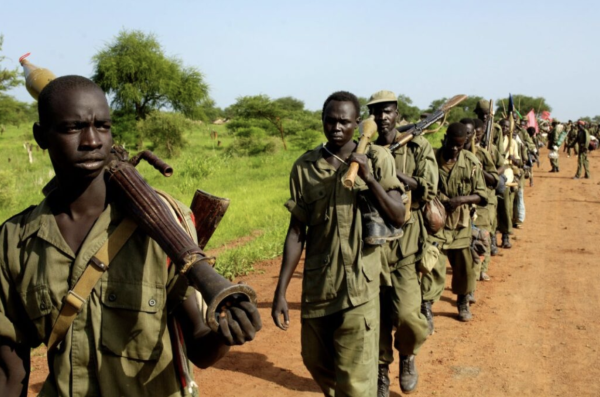
The violence in Sudan is truly devastating and horrifying. Both the RSF and SAF have been widely accused of committing war crimes and other large scale atrocities. The RSF, in particular, has targeted a staggering number of civilians, and since the civil war began in April 2023, an estimated 150,000 to 400,000 people have been killed. The RSF has proven to stay true to their claims and goal of claiming political control, at the cost of thousands of civilians with ethnic cleansings, mass killings, and human rights abuses.
Islam Abdullah, the mother to a 13 year old boy living in Sudan, articulates how her son had fallen victim to a recent shelling attack, leaving his whole body filled with shrapnel. Abdullah is not alone in this horrifying experience; another mother, Samag Abdullah Hussein explains how her young son, Samir, had been recently buried in a mass grave. She describes the horror she had witnessed with her son being hit in the head by bomb remnants, resulting in parts of his brain coming out.
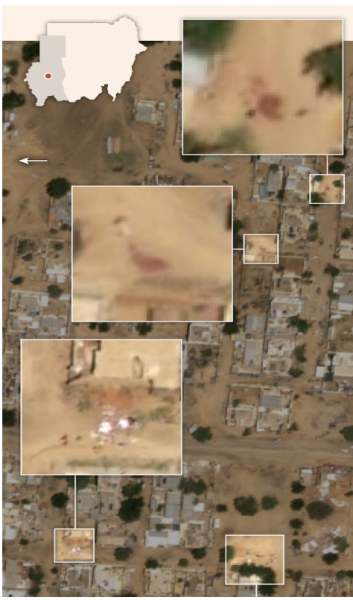
The RSF was also accused of bombing a maternity hospital, killing 460 people. These air strikes, bombings, and door-to-door murders have had extremely grave consequences. The devastation of these actions can be seen from space, as satellite images have picked up on mass puddles of blood in Sudan.
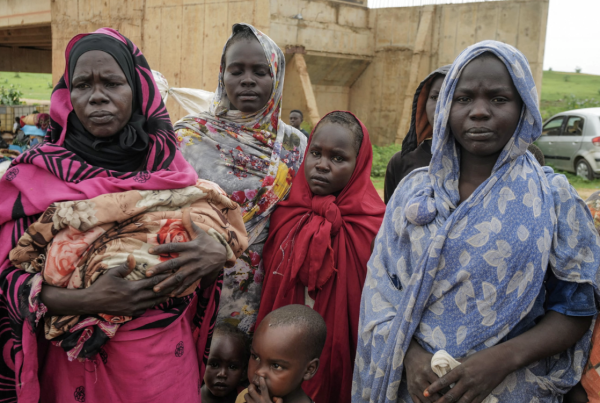
Not only is this violence seen through bombings, but also through the extreme sexual violence inflicted on Sudanese women and children. The United Nation’s children agency, UNICEF, gave harrowing reports of armed men “raping and sexually assaulting children as young as one,” leading to many children attempting to end their own lives after the violence imposed on them.
The RSF’s goal of ethnic cleansing is seen through these violent attacks, with the UN investigators stating that they had received a testimony of RSF fighters mocking non-Arab women with racist slurs and telling them that they will force them to bear Arab children, all while committing rape. Reports include RSF soldiers raping or gang-raping thirty-six women and girls as young as fifteen, raping a mother after tearing her away from her breastfeeding baby, severe beatings, and torture with an array of tools.
Female medical workers were also targeted and exploited by RSF troops. Survivors explained that anyone who opposed rape risked their lives. For example, an eleven-year-old boy who was beaten to death as he attempted to save his mother as she was being violated. These atrocities have led to a psychological and physical burden on all those affected—all victims are being traumatized, humiliated, and treated as less than nothing.
As for the work being done by other countries to stop the violence in Sudan, it is very minimal. Because the genocide in Sudan is the most underreported conflict, the media coverage surrounding it and direct action being taken by other powers has not measured up to the level it should be. This is partly because many countries have become involved in the war, each supplying arms and funding to opposing sides, making the situation infinitely more difficult to navigate.
Among all the countries involved in this conflict, one nation has made an exceedingly controversial impact on the state of Sudan: Russia. During the al-Bashir regime, Russia had a heavy diplomatic presence in Sudan as it worked toward securing agreements between the two sides. Since 2012, Russia has maintained a stance of support for the Sudanese government and SAF. In 2017, al-Bashir visited President Putin, at a meeting organized by a major beneficiary of international war, the Wagner Group. The Wagner Group is a Russian founded private military group and is officially the largest mercenary group in the world.
As a token of his appreciation for the official meeting, al-Bashir granted Russia mining and convenient immigration rights. This, along with opening up a military port in the Red Sea, became the main incentive for Russian assistance and the presence of the Wagner Group in Sudanese affairs. The Russian government initially claimed to support SAF, however, in the midst of Russia’s national interests, the Wagner Group became affiliated with the RSF.
As Hemedti started to gain power, he was able to provide legitimate certainty for Russia’s success with their exploitation of Sudanese resources; consequently, the Wagner Group became his main military ally. This infiltration into Sudan’s land allowed Russia to illegally smuggle gold from Sudan back to Russia, all while increasing Russia’s gold reserve. As the RSF group continued to permit this export, the Russian government began to supply these forces with weapons and training, including surface-to-air missiles. This strong support from Russia could eventually prove to be pivotal in the Rapid Support Force’s potential dominion of Sudan.

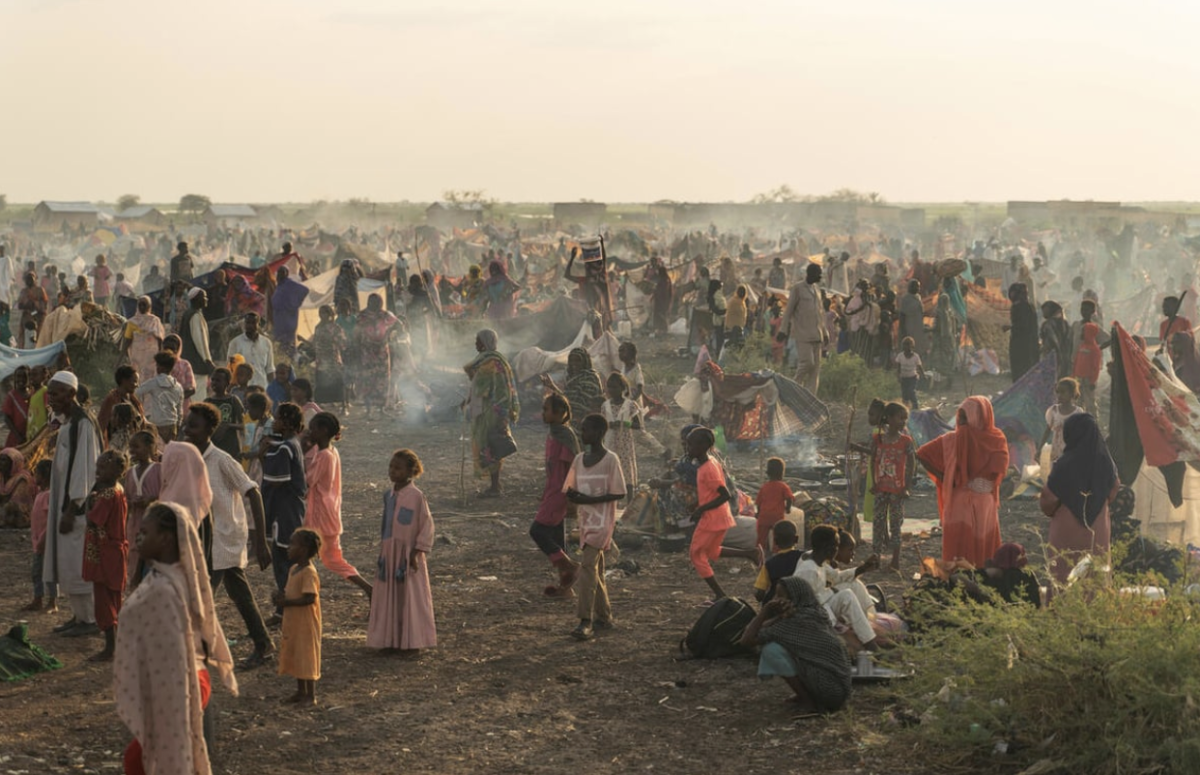
Over 200,000 people killed, 12 million displaced, 24.6 million people left hungry, thousands of unreported rape cases, and the world’s largest famine crisis are just some of the startling numbers coming out of Sudan at present—and yet, it remains one of the most underreported wars in the world. The extreme humanitarian crisis, including brutal torture, gender-based violence, rape, mass murder, and sexual slavery has led Sudan to enter a modern day genocide.
When the blood of innocent civilians is staining the lands of our Earth, our nations should be working collaboratively towards providing immediate relief. The media must rise to the occasion and report on this with more vigilance as a voice for those in Sudan unable to speak for themselves.
If not changed, this lack of initiative, protesting, and call to action of bystander countries is a failure that is going to devastate the history of Sudan and Africa forever. And until the world decides to open its eyes to Sudan, silence will remain the deadliest murderer of all.